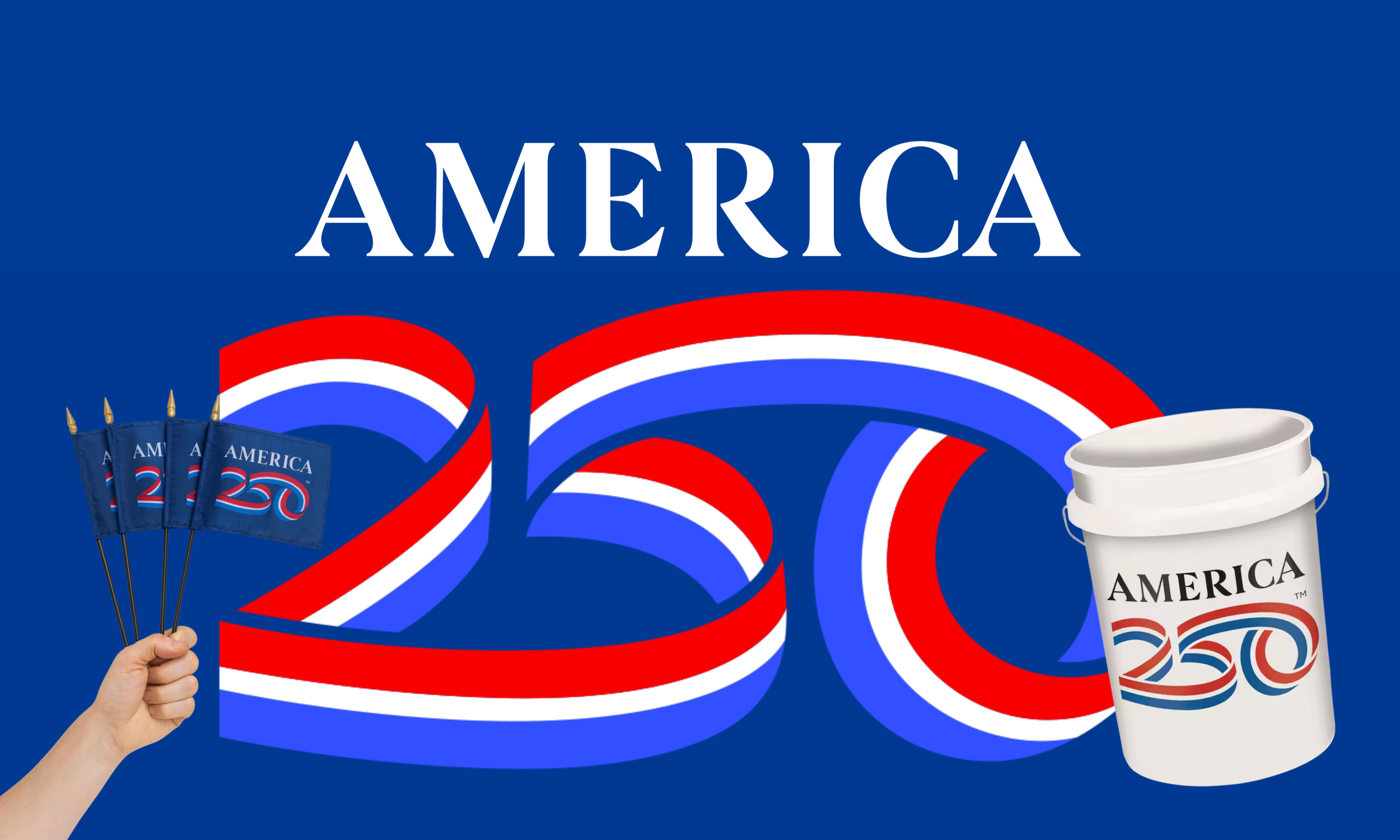
Above: The America250 logo and some of the official licensed product
This week I’m living through my first Fourth of July on American soil. I count myself lucky for the timing of it - this isn't just any Fourth of July, it's the 250th. A quarter of a millennium since the country's founding, and a genuinely once-in-a-lifetime marker to be here for.
But this wouldn't be the Born Perspective if it stayed at that. Because behind the fireworks, the flags, and the hot dogs sits a licensing program - an official one, with logos, fees, restrictions, and a couple hundred companies that have signed up to be part of it. So I want to walk through what the 250th actually is, who's commercializing it, and what it teaches us about a corner of the industry more brands are strategizing around every year: anniversary licensing.
What the 250th Actually Marks
The clunky official name is the semiquincentennial. What it marks is this: on July 4, 1776, the Continental Congress adopted the Declaration of Independence, formally breaking the American colonies from Britain and King George III. The trivia worth knowing - the vote for independence actually happened two days earlier, on July 2, and most of the founders didn't physically sign the parchment until August. July 4th is simply the date on the document, and the date that stuck.
A milestone like this only comes around once. That once-in-a-lifetime quality is exactly what makes it fertile ground for commemorative product - people reach for a keepsake precisely because something will never come round again. Which is where the licensing starts.
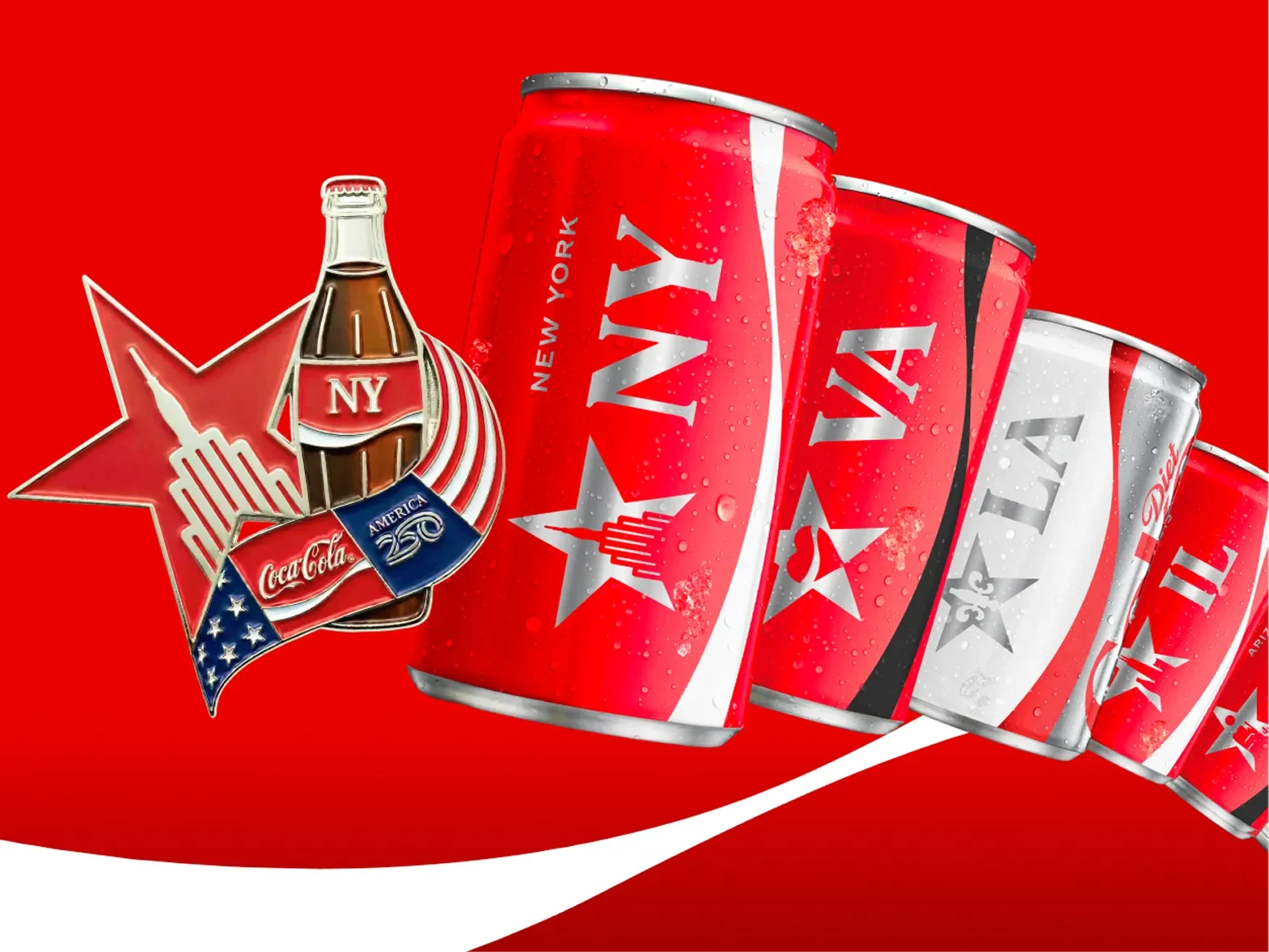
Above: Coca-Cola was one of the big names that backed America250
America250 Is a Brand, and the Brand Has an Agent
America250 - officially the U.S. Semiquincentennial Commission - was established by Congress back in 2016, deliberately built to be nonpartisan. Its honorary national co-chairs are former Presidents George W. Bush and Barack Obama, alongside former First Ladies Laura Bush and Michelle Obama, one from each side of the aisle by design. And here's the part that matters to us: America250 is, at the end of the day, a brand. It has an official logo, and that logo is a licensable asset.
The official licensing agent is Global Icons, an LA-based agency, practically on my doorstep now. Its CEO recently walked License Global through the whole program, calling it, and I quote, one of the most expansive and accessible licensing programs ever developed for a national celebration. Global Icons took the assignment on in May 2025, and the process is disciplined: apply, go through a business review, clear a category and distribution assessment, then get final sign-off from the Commission itself. Approved licensees receive a fixed logo lockup they're not permitted to alter, with restrictions built in to protect the mark. This is not a click-and-go logo grab.
“one of the most expansive and accessible licensing programs ever developed for a national celebration ”
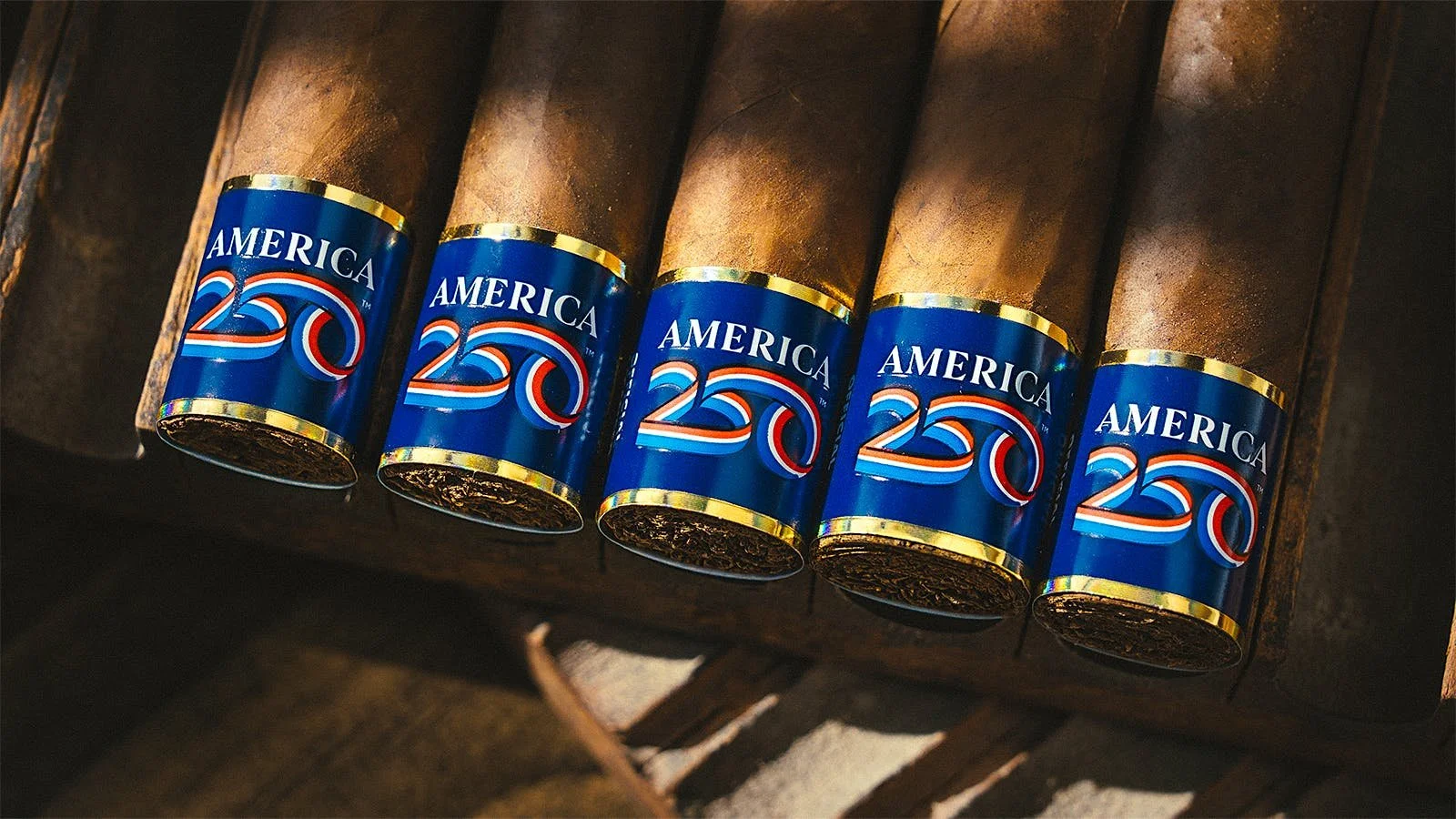
Above: licensed America250 cigars by J.C. Newman
What the License Actually Buys
Here's the insight worth sitting with. Nobody needs permission to be patriotic. You can put red, white, and blue on a product, nod to the 250th in plain descriptive language, and sell it all day long without ever touching a license agreement. It's completely legal, and this Fourth of July, most of what's on the shelves will be exactly that: unlicensed, patriotic, and perfectly fine.
So if the colors are free and the sentiment is free, what is a brand actually paying Global Icons for when it signs on as an official licensee? Not the subject matter. The seal. The small, specific, non-negotiable signal that says this isn't generic red-white-and-blue merchandise - this is the real thing, endorsed by the national commission. Everything else built on top of that - the official bourbon from Evan Williams, the cigars from J.C. Newman, the tie-ins with Major League Baseball, the NFL, Jeep and Ram - is downstream of that one decision to grant official status.
More than 200 companies have now gone through that vetting process, spanning apparel, eyewear, watches, home decor, drinkware, collectible coins, publishing, toys, and food and drink. My personal favorite is the official America250 five-gallon bucket from Home Depot - because when the branding reaches the humble hardware bucket, you know a licensing program has properly arrived. I went looking for one myself last week. I walked the aisles, found the bucket section, and came up empty. The associate I asked told me it was sold out - and that I was the fifth person that day to ask him the exact same question.
A licensed hardware bucket, sold out, with a line of customers asking after it by name days before the holiday even arrives. Most of them didn't need the license to make a product. They needed it to make an official one - and evidently enough people care about that distinction to keep asking for it after the shelf is already empty.
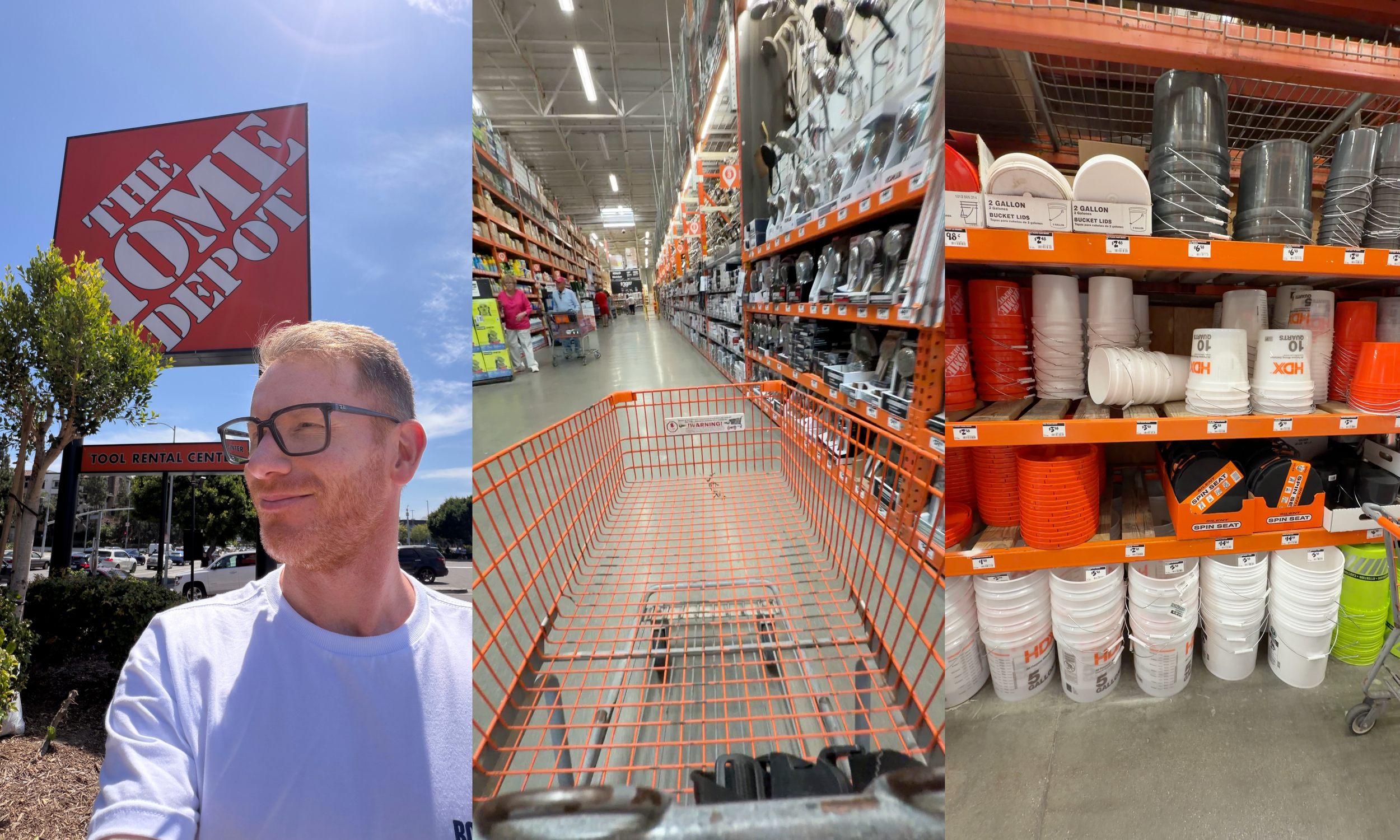
Above: I left empty handed from my hunt to find the licensed America250 bucket at Home Depot
Tentpole Risk, Tested in Real Time
There's a legitimate strategic question underneath all of this. Tentpole licensing behaves differently than evergreen licensing. A character brand can be sold for decades. A semiquincentennial has a hard close date - the window opens, the moment happens, and then it's over. The obvious risk for any retailer stocking a one-time anniversary program is dead inventory: product nobody wants the week after the holiday, sitting in a back room while attention moves to the next cultural moment.
That's a fair concern to raise before the fact. It's a different thing to test it against what's happening on the ground. A sold-out bucket, five inquiries deep in a single day at a single store to a single Home Depot assistant, is early evidence pointing the other way - at least for the properties Global Icons chose to bring into the program and vet properly. The risk in commemorative licensing was never really about demand at launch. It's about whether the licensor did the work to make the mark worth wanting in the first place, and whether the retail plan can keep pace once that demand shows up.
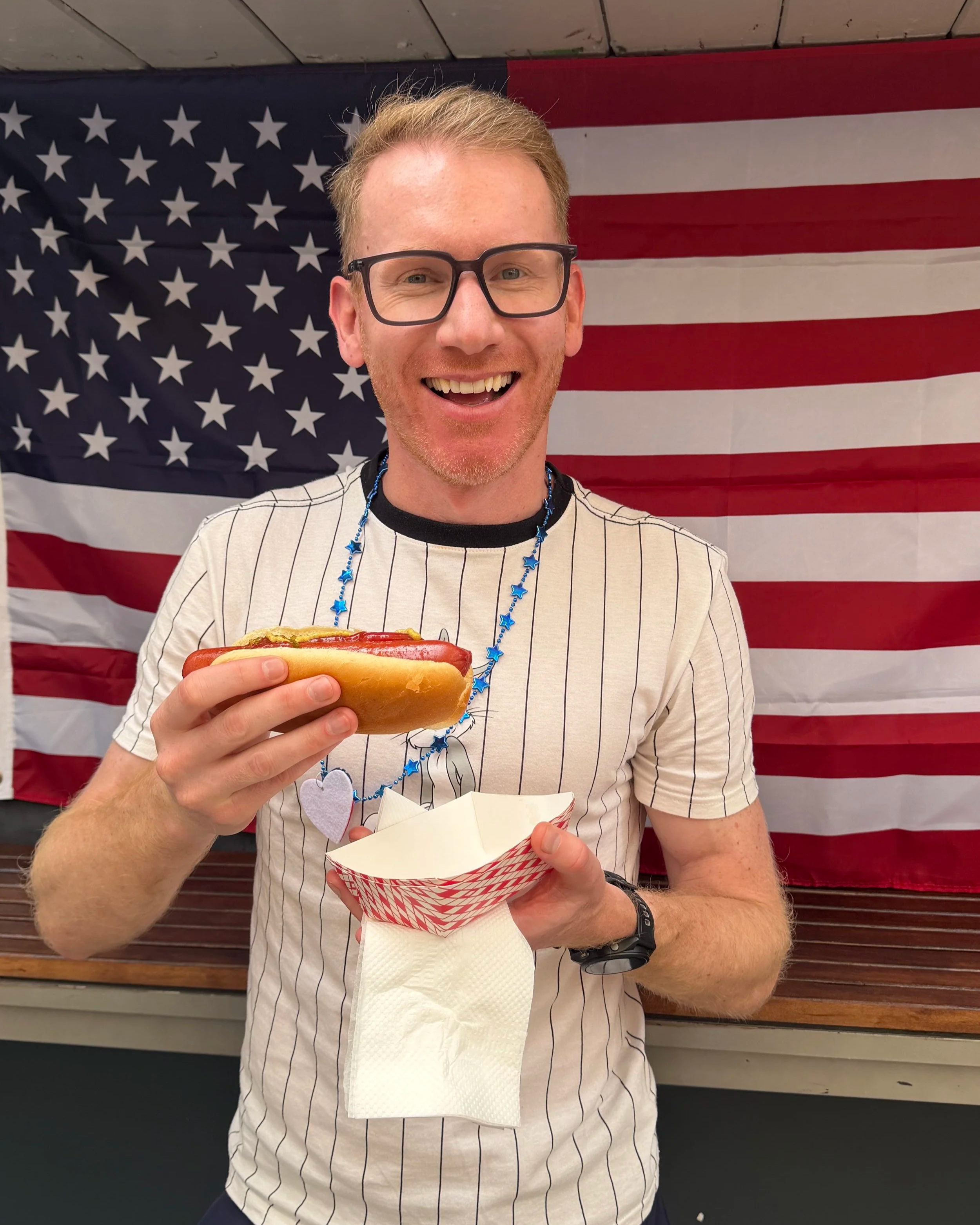
Above: eating a hot dog in front of an American flag on July 4.
Getting Amongst It
As for me, I'm doing the very American things this weekend. I'm near the coast here in LA, so Hermosa Beach is firmly on the agenda, along with a hot dog and whatever else the Fourth demands of a first-timer. There'll be fireworks once it gets dark. None of it will feel like licensing while I'm standing in it - that's rather the point. It's on the cap of the person next to me at the beach, quite possibly in the bucket someone else managed to buy before I got there, and in the small print behind almost everything branded red, white, and blue this weekend that isn't just red, white, and blue.
listen to the podcast
The Bottom Line
The most instructive licensing programs are rarely the ones built around instantly obvious IP. They're the ones like this - hiding in plain sight - where the entire commercial engine runs on a single decision: who gets to say official, and who has to settle for merely patriotic. If you run a brand or hold IP and you're building a licensing program, that's the question worth sitting with before you talk about categories, royalties, or retail distribution. What, precisely, is the seal you're selling - and is it actually worth queuing up for?
want to connect?
The Born Perspective is one part of a bigger conversation. If you want more, you can find me on LinkedIn for industry commentary, Instagram for what's happening day to day, and YouTube and the Born to License Podcast for deeper dives into the world of licensing. Pick your platform. I'll be there.
Explore the Born Collective
Everything I build connects back to licensing. Here's where to go depending on what you need: