Six Months Into 2026: Grading My Own Licensing Predictions and What Actually Happened
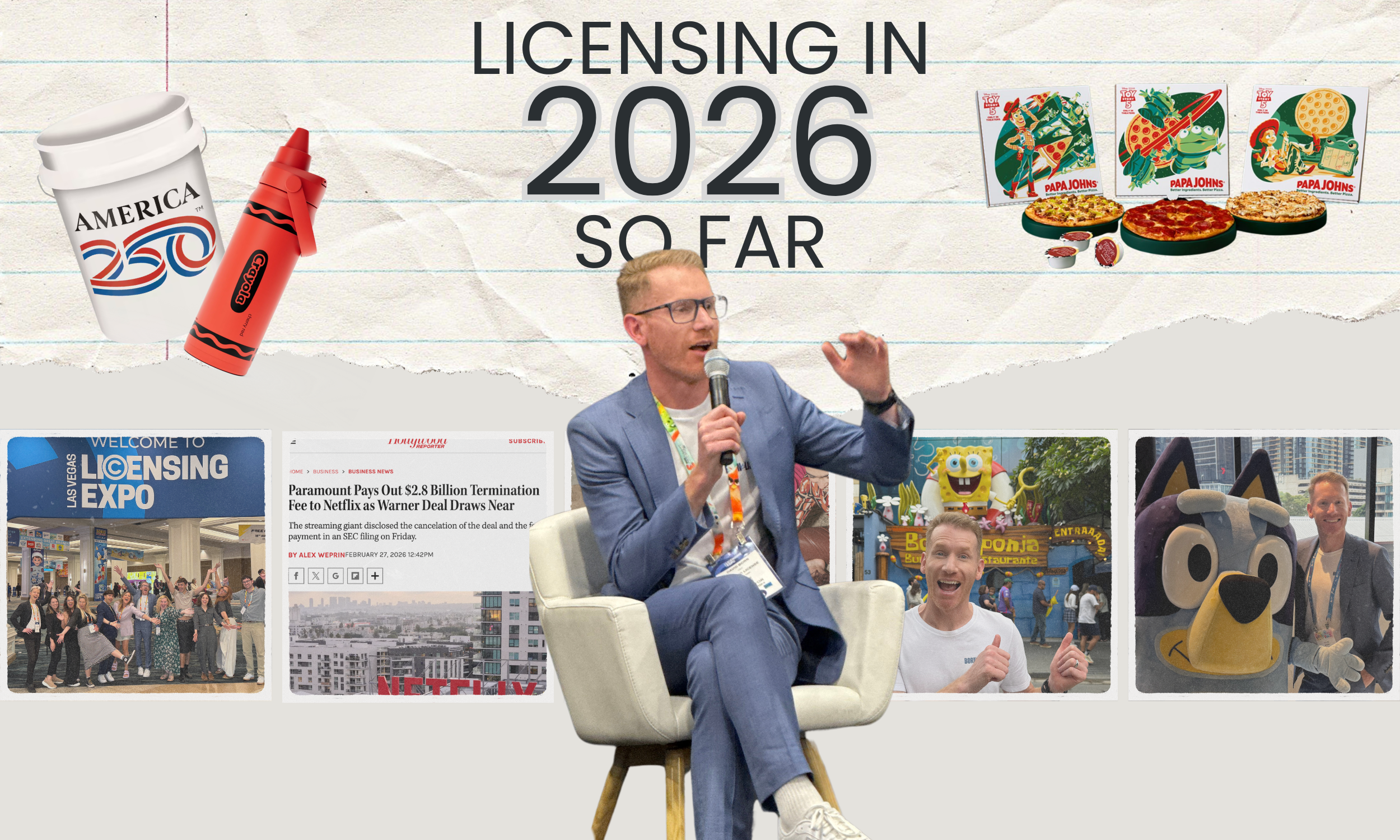
Above: A Spongebob restaurant, Toy Story 5, Licensing Expo, a mega merger, viral licensed products. It’s been a big first half of 2026!
Back in January, I put a stake in the ground and made predictions about what 2026 would do to our industry. A mega merger. A stacked theatrical calendar. Talent shaking loose from the biggest studios in the world. Six months later, we're at the halfway point, and it's played out faster and stranger than even I expected.
I don't think enough people in this industry go back and check their own work. So that's what this post does. Not a highlight reel - a bit of a scorecard. Predictions assessed, the biggest stories revisited, and a catch-up on everything that's happened in licensing since January. If a story below grabs you, I've flagged which episode to go find in the feed for the full breakdown.
The Movie Calls: Two Right, One Half-Right, One Wrong About Being Wrong
My January predictions episode became one of the most listened-to episodes we've ever put out, so it's worth grading properly. On Toy Story 5, I said the franchise was licensing gold and gave it a 10 out of 10, with one caveat - some franchise fatigue given it's the fifth film. I stand by the 10. The fatigue never showed up.
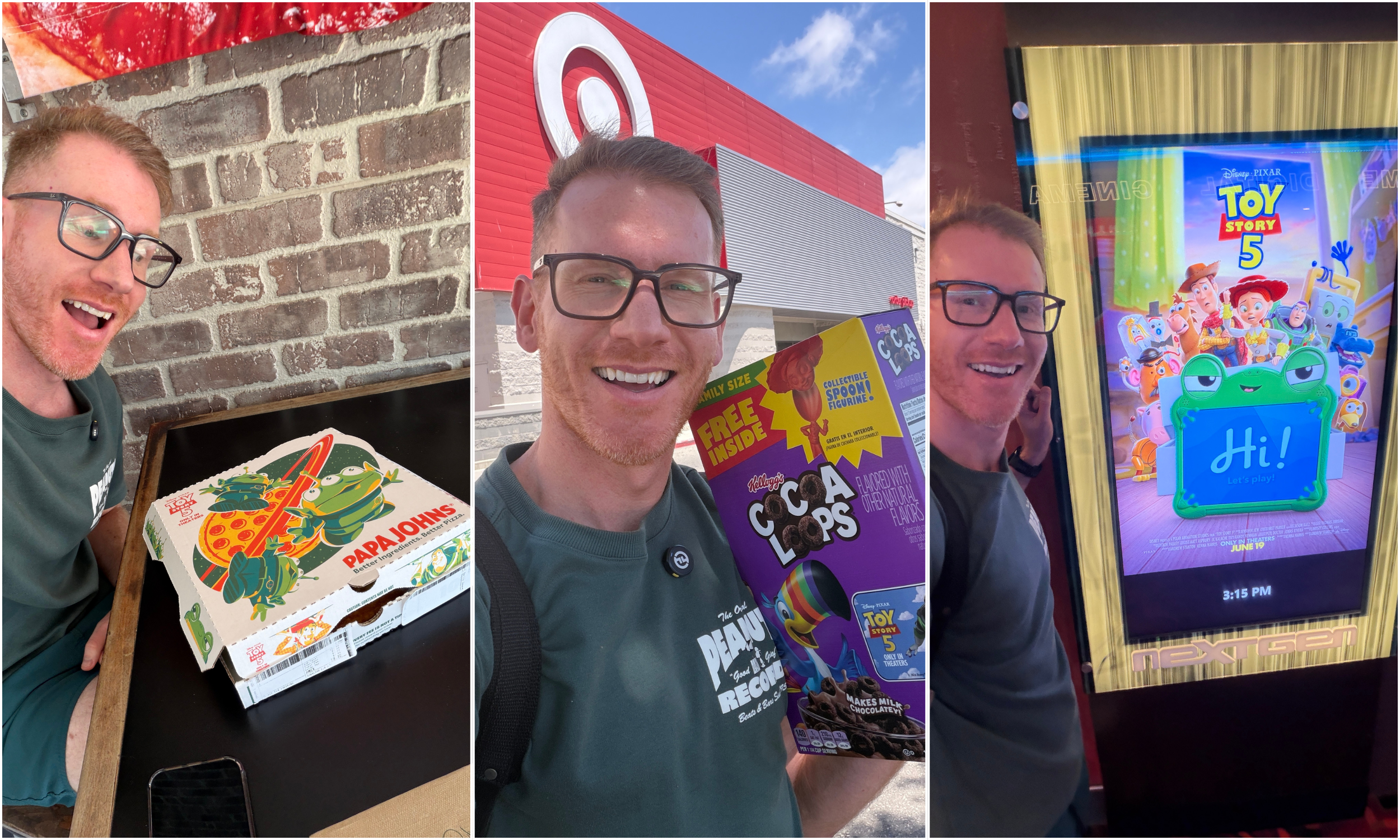
By the time it opened in June, Toy Story 5 had taken over Los Angeles before I'd even unpacked from the move - a Pizza Planet built out of an actual Papa John's, physical cereal box prizes back for the first time in a decade, and Taylor Swift writing an original song for Jesse's storyline. The brand didn't need that boost. It got one anyway.
Super Mario Galaxy was the second call, and I said Nintendo and Illumination were going cosmic. What actually happened was one of the wildest promotional rollouts I've seen in years, spanning Jakks Pacific, Mattel's Fisher-Price line, McDonald's, General Mills across more than 100 SKUs, and a Guinness World Record for the smallest popcorn bucket ever made. Mario doesn't need a film to sell. The film just gave every retailer a reason to go big at the same moment.
Star Wars is the one that actually tests the thesis. The Mandalorian and Grogu opened respectably, then dropped 70% in its second weekend — the worst second-weekend decline of any Disney-era Star Wars film. Two low-budget YouTube-director films outgrossed it the same month. And my honest read on what that means for licensing: almost nothing. Kids wear Star Wars without knowing what Star Wars is. Our client Hippo Blue sells Star Wars bento boxes to families whose kids have never seen a single film. That's not a franchise chasing a box office number — that's an evergreen brand that's been showing up for 50 years and doesn't need a win to keep showing up next year too.
Fewer, Bigger Owners of the IP We All License
This is the story I flagged as the elephant in the room in January, and it moved faster than I predicted. I said the Netflix–Warner Bros. Discovery deal, or the Paramount version of it, would dominate headlines through 2026 but probably wouldn't close this year. Wrong on the timeline. Netflix walked from its $82.7 billion bid, and Paramount - under David Ellison - won outright.
The math is what makes this a licensing story and not just a media story. Paramount alone was already the 12th-largest licensor in the world. Warner Bros. Discovery was sixth. Combined, that's roughly $22 billion in licensed retail sales, making the new entity the fourth-largest licensor on the planet - ahead of NBCUniversal and Mattel, in one move. SpongeBob and Paw Patrol now sit in the same catalog as Looney Tunes, DC Comics, and Harry Potter. That's a catalog that starts to genuinely rival Disney.
Here's the part I said plainly on the emergency episode I recorded the day it broke, and it's still true: when two massive licensing departments merge in the name of efficiency, great people lose their jobs and great brands get left on the shelf. Beavis and Butt-Head, Ren & Stimpy, Yogi Bear, the Jetsons - a combined team may simply not have the bandwidth to develop them properly.
It's not an isolated story either. Sony bought a 41% stake in Peanuts for $450 million, valuing the franchise at $1.1 billion — licensing Peanuts, I said at the time, isn't like borrowing a library book, it's like borrowing the Mona Lisa, and the Louvre is watching everything you do with it.
And Authentic Brands Group — the machine behind Reebok, Elvis, and Marilyn Monroe — signed to acquire Care Bears, its first real character franchise, after the previous owners grew it roughly fourfold in three years. Fewer, bigger owners of the IP we all license. That reshapes who you sit across the table from, and how much power sits on the other side of it.
The Oscar Category That Actually Pays Your Licensees
I'll keep saying this until people stop needing to hear it: Best Animated Feature, not Best Picture, is the most important category at the Oscars for our industry. Best Picture winners almost never translate into a consumer products business. Best Animated Feature winners built entire retail categories — Shrek, Finding Nemo, Frozen, Toy Story 3 and 4. This year I backed K Pop Demon Hunters going in, and it's been the single most talked-about IP in licensing for six straight months, dominating toy fairs on three continents before most retailers had product on shelves. Netflix's own CMO admitted on stage at Licensing Expo that they were caught flat-footed early. That's since been corrected hard, with Hasbro and Mattel both stepping into significant licensing roles.
A Water Bottle, a Hardware Store Bucket, and a $380 Billion Industry Hiding in Plain Sight
Two products this year told the real story of our industry better than any deal announcement did. A limited-edition CamelBak collection styled like Crayola crayons — down to the lid mimicking the crayon tip — went viral on LinkedIn seven months after it quietly launched with no attention at all.
And an officially licensed America 250 55-gallon bucket, sold at Home Depot as part of a 200-plus licensee program spanning apparel to bourbon, sold out by the time I got there to buy one.
On paper, nothing connects a viral water bottle to a hardware store bucket. In practice, they're the exact same mechanism: a licensor granting rights, a team managing approvals and royalty reporting, brand guidelines enforced end to end — all invisible to the person buying the product. Nobody covering either story called it licensing. That's the industry in two objects. It's a $380 billion global business, and almost nobody outside our world says the word out loud.
Pokémon turning 30 this year makes the same point at a different scale. Over $103.6 billion in licensed retail sales across its lifetime — more than Disney, more than Star Wars, more than Marvel. $12 billion in 2024 alone, making it the seventh-largest licensor in the world on the strength of one brand. Right on cue for the anniversary, Logan Paul sold his PSA Grade 10 Pikachu Illustrator card for $16.492 million, officially the most expensive trading card of any kind ever sold at auction. Generational reach, emotional connection, and scarcity. Thirty years in, nobody does it better.
What AI Actually Threatens — and It Isn't What Most People Think
I took the AI conversation live on a panel at Licensing Expo, and the exchange I keep coming back to is this: AI is not a replacement for the two things that actually drive this industry — trust and relationships, built up over decades and impossible to replicate. But I also used that stage to raise the warning I believe just as strongly. AI can now handle a lot of the administrative, entry-level work that used to be how people broke into licensing. That's how I got my start twenty years ago at Haven Licensing in Australia, and it's why we now have a team of 14 bringing innovation to this industry. Use AI to make your experienced people faster. Don't use it to avoid hiring the next generation. We need them now, or there won't be a next generation of people running this industry in twenty years.
Two Founders, Two Different Scales, Same Underlying Lesson
Two of my favourite conversations this year were with people building licensing programs from the ground up at completely different scales. Davie Fogarty took the Oodie from $500 to $850 million in sales, and unlike almost every guest I have on, licensors came to him. His advice wasn't about chasing big names — it was that you don't want the big licenses until your team can actually forecast SKUs and revenue, or you'll end up in hot water fast. He also told me landing the Pokémon license was one of the hardest things the Oodie ever pulled off, and it became their best license ever.
Aldo, who runs Courtney Brands and its retail label Hippo Blue out of my hometown of Melbourne, worked with our team on a Disney license spanning Marvel, Star Wars, Pixar, and Mickey Mouse. The results: a 400% increase in customer acquisition and 30% year-on-year growth for the business overall. His advice for anyone starting out was simpler than anything I could have scripted: manage expectations, keep it simple, start small, be patient. Results come.
The Personal Ledger
This show has always been as much about the person doing the licensing as the licensing itself, so a few updates. In April, my partner and I spent eight days completely offline trekking to Everest Base Camp. Twelve years running Born Licensing, and I'd never once been fully unreachable. What I came back to wasn't the crisis I half-expected - it was proof the business didn't need me in the room every single day. For an operator who built a company around being the relationship in the room, that's not a small thing to learn at year twelve.
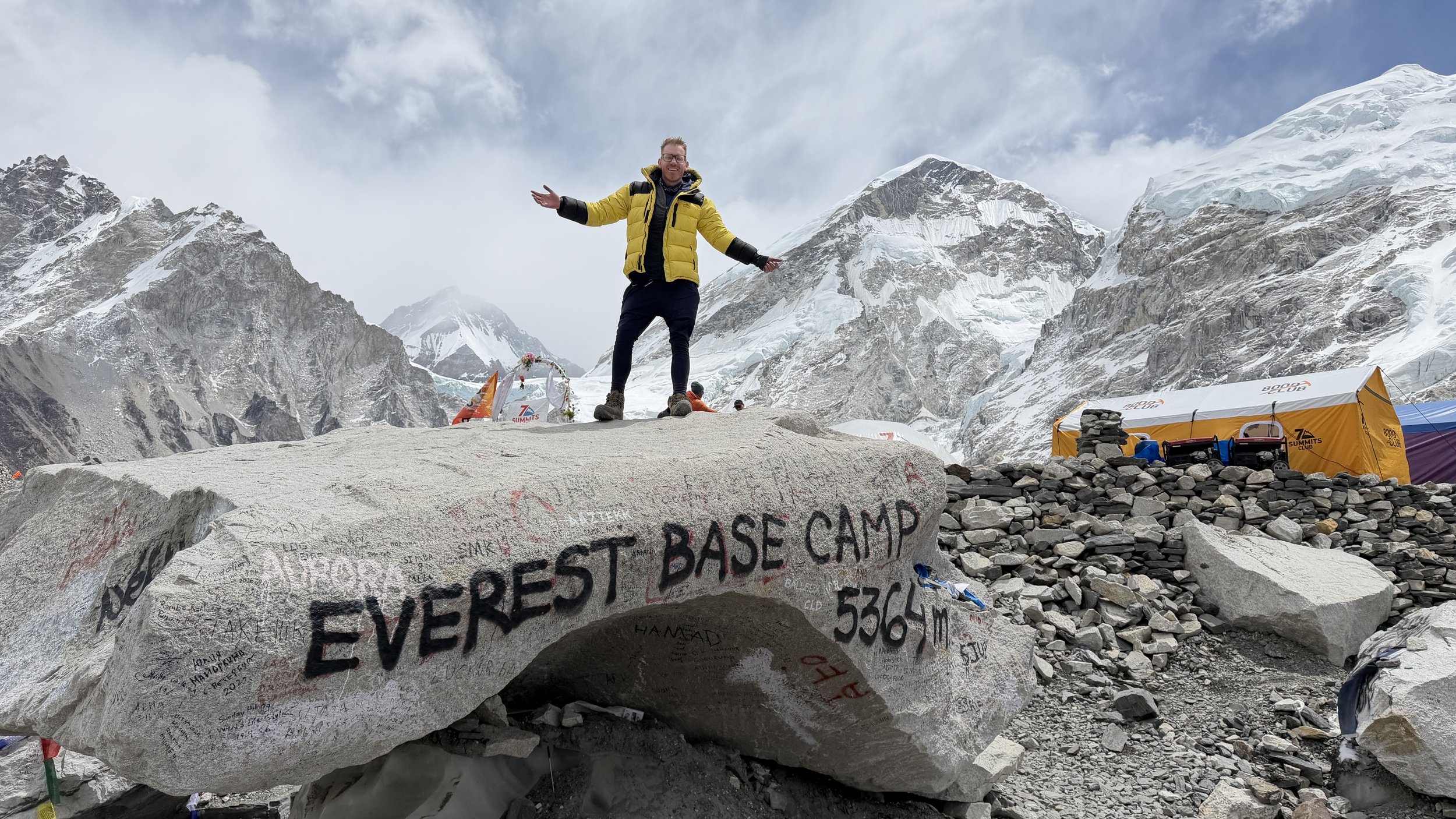
Above: In April I climbed to the base camp of Mount Everest to celebrate my 40th birthday and 10th wedding anniversary!
In June, I made the move to Los Angeles - my fourth continent as a home base, after Melbourne, London, and Brazil. It's not a lifestyle decision. The US is the largest segment of our client base, and most of our studio relationships run through this city. If you're running a licensing agency working with major entertainment studios, there's really only one city to be in.
And somewhere in between, I finally made it to the world's first standalone SpongeBob SquarePants restaurant in São Paulo — every detail, down to the bathroom tiles, on brand. SpongeBob was the first character I ever worked on, almost twenty years ago, and I've licensed him more than anyone else since. Ten Krabby Patties out of ten.
listen to the podcast
The Bottom Line
Six months down, six months to go. A merger reshaping the biggest licensors on the planet. An animated film that's both an Oscar story and a licensing one. A water bottle that reminded the world our industry exists without anyone saying its name. Fewer owners holding bigger catalogs, AI sorting out what it can and can't replace, and two founders proving the fundamentals - know your brand, start small, be patient - still beat every shortcut. If there's one thread through all of it: the deals get bigger and the ownership gets more concentrated, but the businesses that actually win are still the ones that understood their brand before they ever looked for a license to borrow. That hasn't changed once in twenty years, and I don't expect it to change in the next six months either.
want to connect?
The Born Perspective is one part of a bigger conversation. If you want more, you can find me on LinkedIn for industry commentary, Instagram for what's happening day to day, and YouTube and the Born to License Podcast for deeper dives into the world of licensing. Pick your platform. I'll be there.
Explore the Born Collective
Everything I build connects back to licensing. Here's where to go depending on what you need: