Dolly Parton Wasn't Just an Icon. She Was a Licensing Strategist.
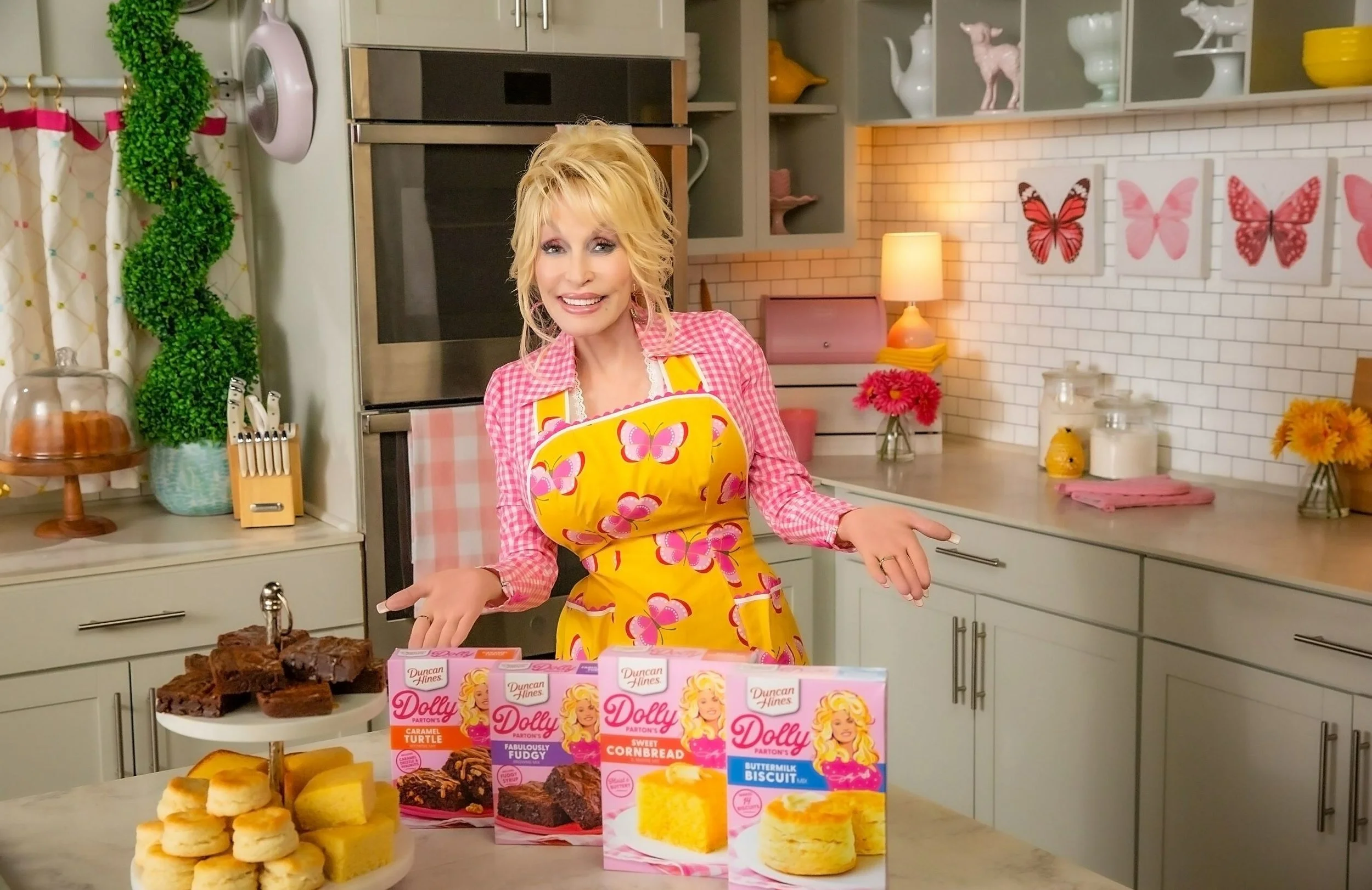
Above: Dolly Parton with her licensed baked goods range.
Dolly Parton died on August 25, 2026, at the age of 80. In the days since, the tributes have focused on the obvious things: the songs, the voice, the sixty-year career, the warmth she projected to people who never met her. All of that is deserved. But if you work in licensing, there is a different story sitting underneath the eulogies, and it deserves its own attention: Dolly Parton ran a disciplined brand licensing operation.
The common misconception about celebrity licensing is that it is passive. A famous person lends a name to a product, collects a fee, and the retailer does the rest. Under that model, the license is only ever as strong as the person's current relevance, and it dies, functionally, the moment they do. That is not what happened here. Parton treated her name the way a sophisticated brand owner treats an asset class: something to be architected, sequenced, and protected across categories, rather than something to be opportunistically rented out to the highest bidder.
The Architecture, Not the Endorsement
Let’s start with the food business, because it shows the sequencing most clearly. In 2022, Parton partnered with Duncan Hines, a Conagra Brands label, on a modest baking line built around family recipes: a couple of cake mixes, a couple of frostings, brokered through her longtime licensing agency, IMG. It performed well enough that Conagra treated it as a proof of concept rather than a one-off. The line expanded the following year into biscuit mixes, cornbread, and brownies. Then, in January 2024, Conagra did something celebrity licensing deals almost never do: it signed an exclusive agreement with Parton that moved well beyond the baking aisle into frozen, refrigerated, grocery, and snack categories across the entire store.
That progression, small proof point, category expansion, then an exclusive multi-category agreement, is exactly how a serious brand owner should sequence a licensing program. Most celebrity deals go the other way: a company overpays for a splashy single-category launch, gets a short burst of press, and quietly lets the license lapse when the sales curve flattens. Parton's team let the retail data justify the scope of the next agreement instead of the other way around.
Then look at what she chose to hold an equity stake in rather than license out. Dollywood was never a licensed product. It is an operating asset she co-owned, in partnership with Herschend Family Entertainment, since 1986, and it is the anchor that made every food and merchandise deal credible in the first place, because the brand behind the cake mix was backed by a real, physical, forty-year-old business with a loyal visitor base. Add the SongTeller Hotel and the Life of Many Colors Museum, opened in Nashville in June 2026 under the same Herschend partnership, and a Broadway musical, DOLLY: A True Original, set to begin previews in December ahead of a January 19, 2027 opening on what would have been her 81st birthday, and the picture is a portfolio, not a series of endorsements. Owned and co-owned experiential assets sit at the center. Licensed consumer categories, food, party goods, apparel through retailers like Walmart, sit around it. That is a structure, not a string of celebrity paydays.
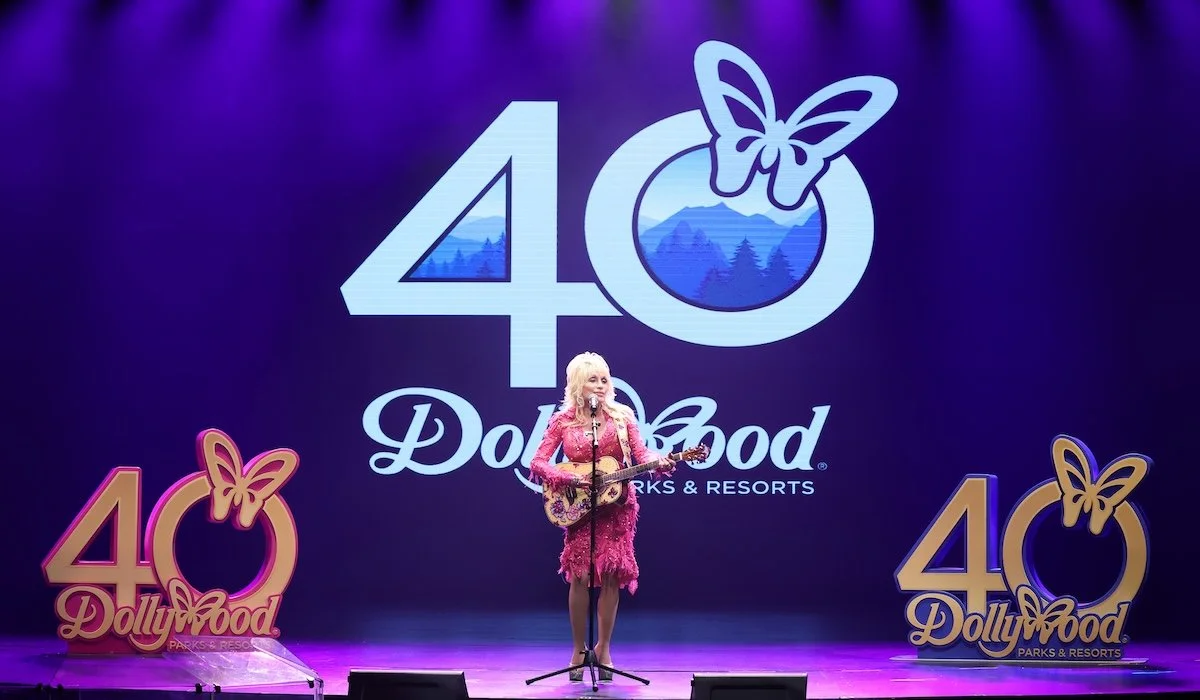
Above: Dolly celebrating the 40th anniversary of Dollywood
What the Days SINCE DOLLY’S PASSING Actually Prove
This is the part that should get more attention from people in our industry than it has. In the days since Parton's death, her commercial infrastructure has kept operating almost exactly as designed. Dollywood reopened the day after her death rather than closing. The Grand Ole Opry dedicated a sold-out, livestreamed show to her the following weekend. The park announced permanent memorial features, a reflecting area, a tribute footpath, a new character called the Dream Maker, that will be built into the 2027 season rather than treated as a temporary gesture. The White House ordered flags flown at half-staff. And on September 16, at the Ryman Auditorium, the Americana Music Association will present her with its Lifetime Achievement Award, an honor announced weeks before her death that she will now, by circumstance, receive posthumously.
None of that is incidental to a licensing conversation. It is the clearest available evidence of whether a brand licensing program was built on a person or built on an asset. A program built on a person creates a cliff: the moment the individual is gone, the retail relationships, the theme park attendance, the merchandise sell-through, all become questions rather than certainties. A program built on an asset creates continuity: the institutions built around the name, Dollywood, the food line, the philanthropy, the catalog, keep generating trust and revenue because the public's relationship was always with the brand architecture, not solely with the individual. What we are watching right now is the second version. That does not happen by accident.
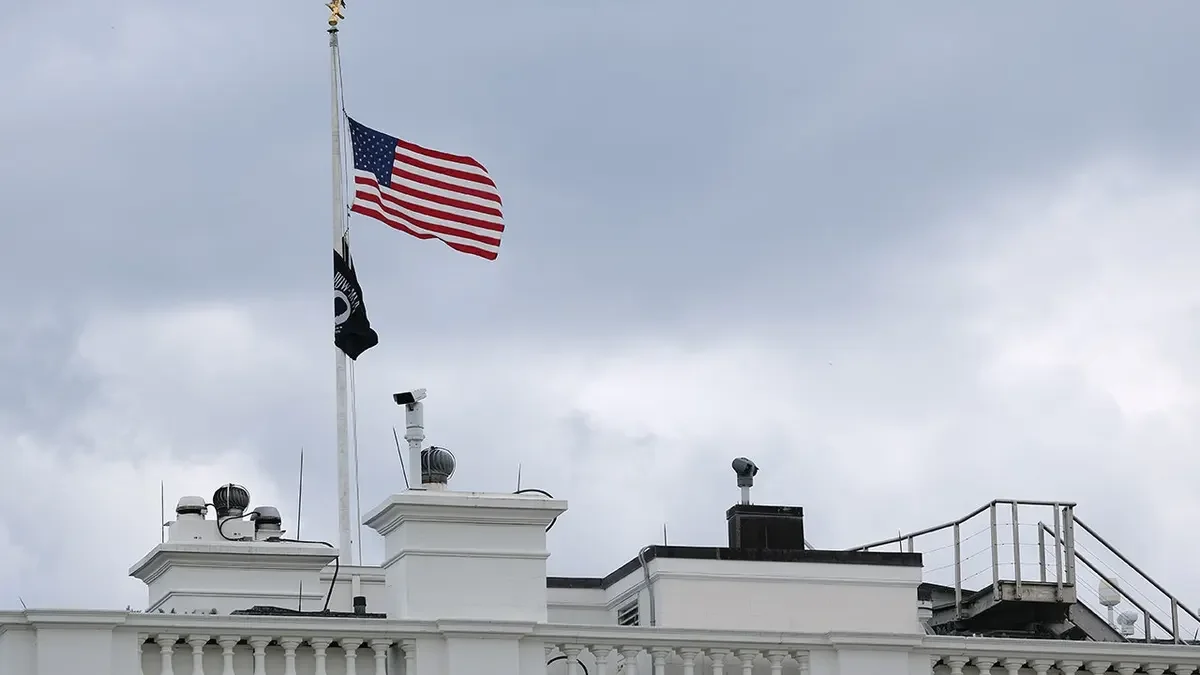
Above: The Whitehouse ordered flags to be flown at half staff to honour Dolly Parton after her passing
What the Data Says About Celebrity Licensing
The category she's filed under by name deserves its own scrutiny. Licensing International's 2026 Global Licensing Industry Study puts the Celebrity property category at $6.7 billion in 2025, a 1.7% share of the $389.8 billion global market, and shows it contracted 4.6% year over year, one of only two property categories to shrink in 2025 (the other was Non-Profit, down 1.4%). Zoom out further and Celebrity licensing hasn't found stable footing in years: it grew 8.3% in 2022, fell 4.1% in 2023, grew 8.8% in 2024, and fell 4.6% in 2025, alternating sign every single year while the total market posted a gain every one of those years. That is not a category with structural footing. It is a category where results depend heavily on which individual names happen to be active, healthy, and culturally relevant in a given year.
There is a second detail worth sitting with. Even as Celebrity retail sales fell, the study found Celebrity was among the categories with the largest average royalty rate increases in 2025, alongside Publishing, Fashion, Music, Sports, and Corporate Brands. Falling volume and rising royalty rates in the same category, in the same year, is the signature of a shakeout: the generic, quick-money, license-the-name deals are getting sorted out of the market, while the smaller number of operators running real, durable programs keep their share of a smaller pie and negotiate better terms for it. It's also worth noting that Licensing International's own definition of Celebrity property explicitly includes, in its language, the estates of individuals who are well known in entertainment and other fields. The industry has always understood that a real celebrity licensing program has to be built to outlast the celebrity.
Access the full 2026 Global Licensing Industry Study here: https://www.licenseglobal.com/licensing-resources/the-global-licensing-industry-study-infographic-2026.
All of this is the same industry that inducted Parton into its Hall of Fame months before she died. Licensing International made the announcement in December 2025, placing her alongside the Hallmark brand and legacy, filmmaker Kevin Smith, and senior operators Allison Ames and Susan Brandt as that year's honorees. In the interview License Global ran with her at the time, republished the day after her death, Parton pointed to Dollywood's 1986 launch, done in partnership with Herschend Entertainment, as the deal that started everything, and was direct about her filter for saying yes to anything since: she'll only put her name on products she would actually use herself, because it has to feel authentic rather than rented. That is, in her own words, the same distinction the data draws with numbers: a Celebrity property category that contracted 4.6% in 2025 while the operators who run it like an actual business, Parton's food, hospitality, fashion, and jewelry lines among them, kept building. Licensing International recognized that distinction while she was still alive to hear it.
The Bottom Line
The 2026 Global Licensing Industry Study makes a case most people in this industry have been reluctant to say out loud: celebrity licensing, as a category defined mainly by fame, is shrinking and swinging wildly year to year even while the total market grew 5.45%, and the operators inside that category who behave like brand owners rather than paid faces are the only reason it has any growth story left to tell at all. Dolly Parton spent four decades proving which side of that line she was on, an equity stake in Dollywood, an exclusive multi-category food agreement, hospitality and stage properties, fashion and jewelry collaborations added on top rather than instead, and Licensing International's decision to induct her into its Hall of Fame two months before she died wasn't sentiment, it was the industry correctly marking its own scorecard in real time. Any brand owner considering a celebrity partnership should ask the same question before signing: are you renting a name, or building an asset that can outlive the person attached to it.
want to connect?
The Born Perspective is one part of a bigger conversation. If you want more, you can find me on LinkedIn for industry commentary, Instagram for what's happening day to day, and YouTube and the Born to License Podcast for deeper dives into the world of licensing. Pick your platform. I'll be there.
Explore the Born Collective
Everything I build connects back to licensing. Here's where to go depending on what you need: