
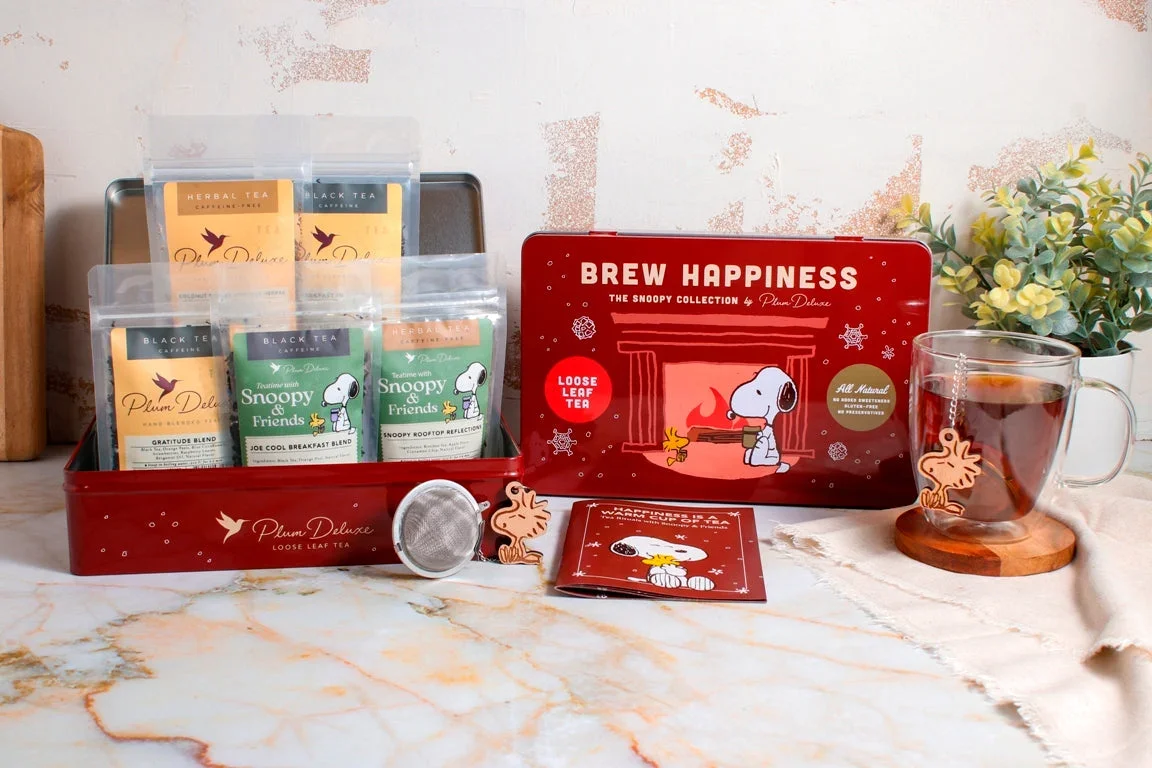
Above: Plum Deluxe’s licensed Peanuts range with Snoopy.
Andy Hayes said something on the Licensing + E-Commerce episode of the Born to License podcast that every founder considering a license should hear. The easiest thing to do in e-commerce, he said, is buy a license and slap a logo on it.
He’s right, and it’s also the fastest way to waste one. Andy runs Plum Deluxe, a Portland tea company, and his first license was a Peanuts holiday tea collection. His point was simple. Why are you paying to put a dog on your product? Because people love him, and they have for decades. The royalty isn’t buying you artwork. It’s buying you access to that love, and whether you get a return depends on whether your product honors it.
The style guide is the starting line
Every licensor gives you a style guide of approved artwork, logos and color palettes. Most licensees stop there, because it’s the easiest route through approvals. The product ends up looking like every other product with that character on it, and customers can tell.
Andy’s approach is to study the property before designing anything. Read the comics. Watch the films. Understand why people are obsessed with the character. His range plans, the documents that set out what you’ll produce and why before the licensor signs off, explain why each character gets a particular tea flavor, why a tin is a particular color and why each image was chosen. The Licensors who have entrusted him with their IP regularly comment on it.
““It’s very important for me to understand the story behind them before just making something. Otherwise, it has no soul.””
The result: the Peanuts collection sold out in about 12 days, before Black Friday and weeks ahead of the holiday shipping cutoff Andy would have been happy to reach. Their Strawberry Shortcake range was still running at around 11% of total weekly sales months after it launched, and customers who had drifted away came back for it.
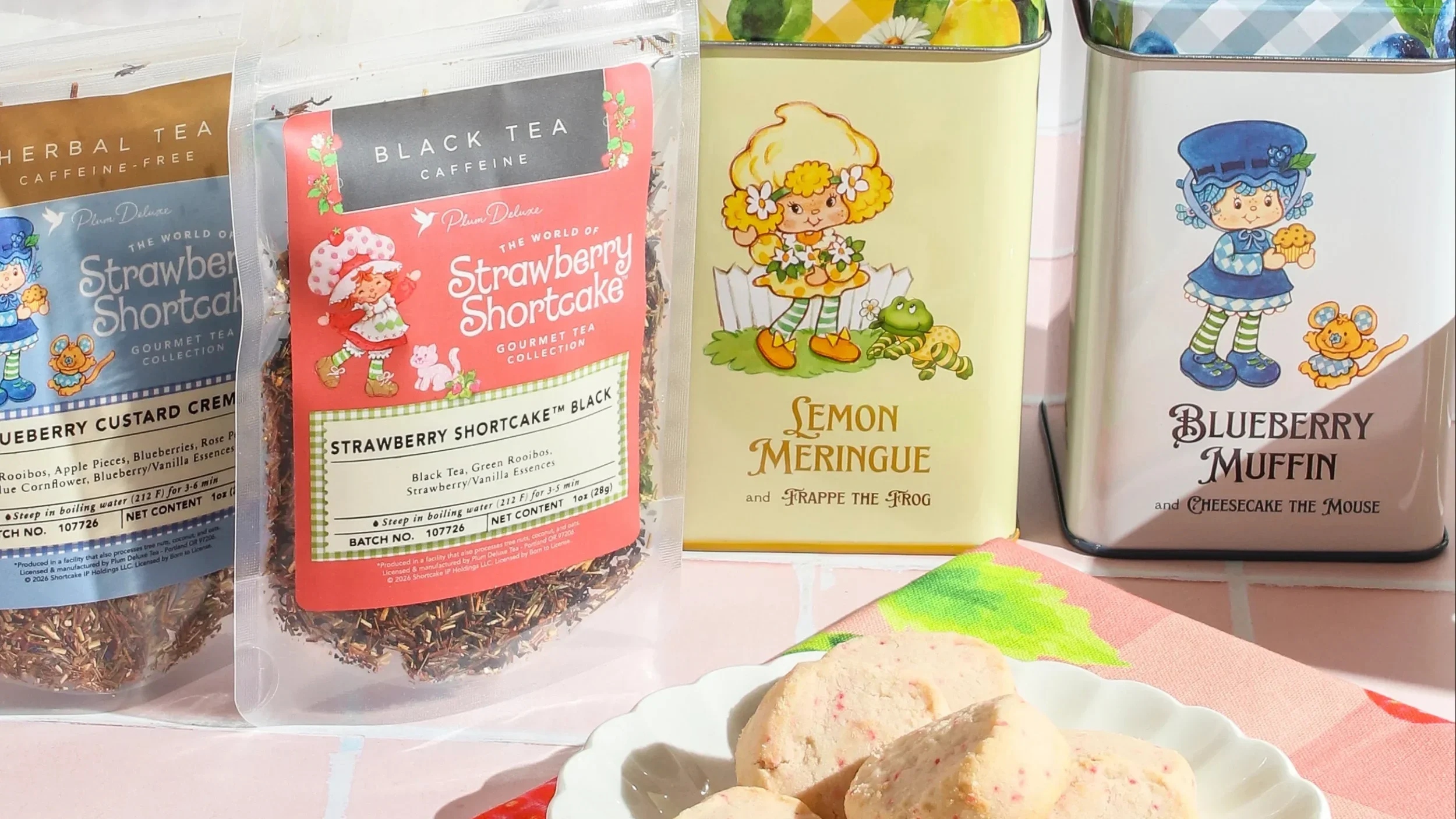
Above: Plum Deluxe’s licensed Strawberry Shortcake range.
Fans are a double-edged sword
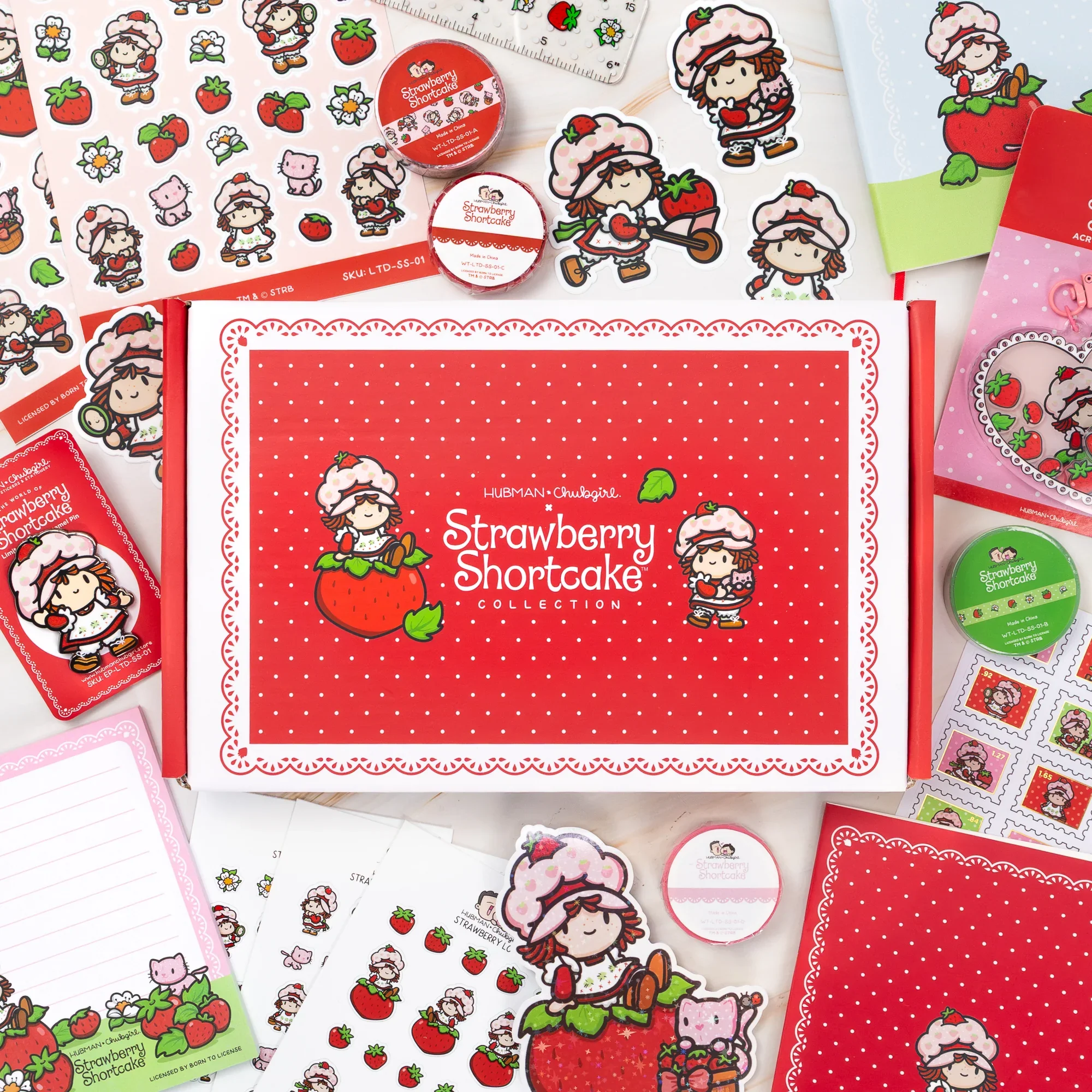
Above: Hubman and Chubgirls licensed Strawberry Shortcake product
Fandoms reward effort and punish shortcuts, loudly. Get it right and they share it, post it and buy it in multiples. Get it wrong and the same people will tell everyone the product is inauthentic, a cash grab and an insult to something they’ve loved since childhood.
That’s the risk the logo-slap approach ignores. A lazy licensed product doesn’t just underperform. It puts your brand name in front of the most vocal audience you will ever reach, attached to something they think is lazy.
Make the property yours
The best licensed products don’t look like licensed merchandise. They look like your product, made better by the character.
Hubman and Chubgirl, a stationery brand built on a love of drawing and journaling, launched its first license this year with Strawberry Shortcake, a deal Born to License facilitated. Rather than relying on the style guide artwork, Chubgirl redrew Strawberry Shortcake in her own signature illustration style. The collection looked like a Hubman and Chubgirl product infused with Strawberry Shortcake, not another piece of generic merch. Early pre-orders sold out on the first day, and they have since run four more presale batches.
Hippo Blue did the same thing through personalization. A Disney backpack with a child’s name on it, in a background color their parent chose, is a product only Hippo Blue makes, even though many companies are licensed for the same characters.
Spend where fans will notice
Sometimes honoring the property means spending real money on the product itself. When CamelBak worked with Crayola, the product team opened a new mold, which is expensive, so the bottle’s lid would be shaped like a crayon tip. It took one of Crayola’s most recognizable brand cues and built it into an everyday water bottle.
Yael Afriat, who leads licensing at CamelBak’s parent group Revelyst, was candid that going viral involved some luck. But the luck had something to work with. With zero paid media, the bottle generated more than 40 million organic impressions in a week, and CamelBak saw its highest click-through conversion in four years. The audience went well beyond kids: millennials buying for themselves, designers and marketers talking about it, bottle collectors and, memorably, the military community, which turned it into memes about Marines eating crayons. That’s what happens when a product taps into nostalgia people already carry.
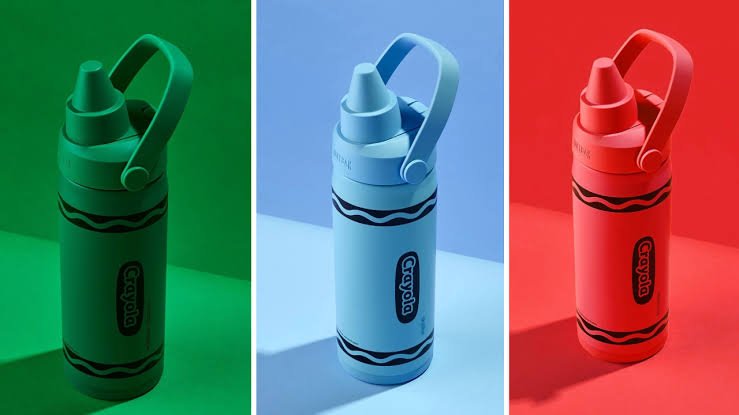
Above: Camelbak’s licensed Crayola product
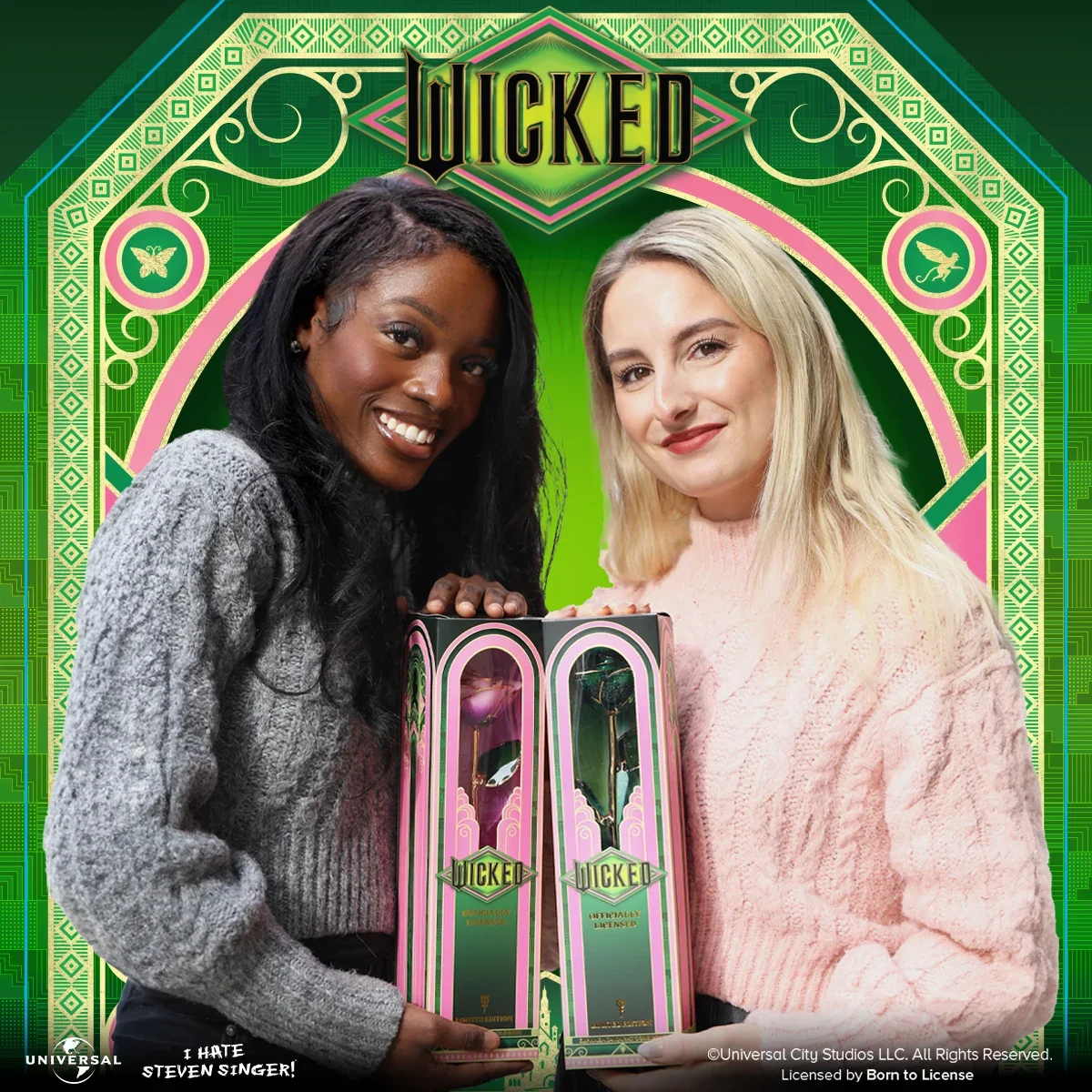
Above: Steven Singer Jeweler’s licensed Wicked roses.
Design for the collector
Fan love also shows up in basket size. Steven Singer Jewelers in Philadelphia launched two Wicked-inspired gold-dipped roses, a pink rose for Glinda and a green one for Elphaba, with Born to License managing the license. Customers didn’t buy one. They bought the pair, and average order value went from around $100 to around $200.
The Oodie sees the same instinct at the extreme. Rebecca Palmer, its head of licensing, told me some superfans own 20 or 30 Oodies. When a new licensed range drops, the person with 20 buys number 21. They don’t need another blanket. They need that one.
Pick something you actually love
There’s a simpler version of all this, and Jasmine James of Fira x Wear lives it. Her company makes premium apparel for anime and gaming fans, and she was clear that she won’t just put a face on a T-shirt. The business is her and her husband Vincent’s baby, and every license has to match their passion. Their first was My Hero Academia. Their second, Invincible, followed the same rule.
That passion paid off commercially. The creators who modeled the launch collection genuinely loved the clothes, so their posts didn’t read like ads, and the range sold out fast on organic reach. Fans can tell when a brand is one of them.
The Bottom Line
A license is the right to borrow an emotional relationship someone else spent decades building. A logo on a product uses almost none of it. The return comes from understanding why fans care and designing something that respects it, whether that means redrawing a character in your own style, paying for a new mold or writing a range plan that explains every choice. That work takes longer and costs more up front. It’s also the difference between a product fans tolerate and one they collect, share and come back for. You pay the same royalty either way. What you get for it depends on whether your product earns the love you’re paying for.
want to connect?
The Born Perspective is one part of a bigger conversation. If you want more, you can find me on LinkedIn for industry commentary, Instagram for what's happening day to day, and YouTube and the Born to License Podcast for deeper dives into the world of licensing. Pick your platform. I'll be there.
Explore the Born Collective
Everything I build connects back to licensing. Here's where to go depending on what you need: