
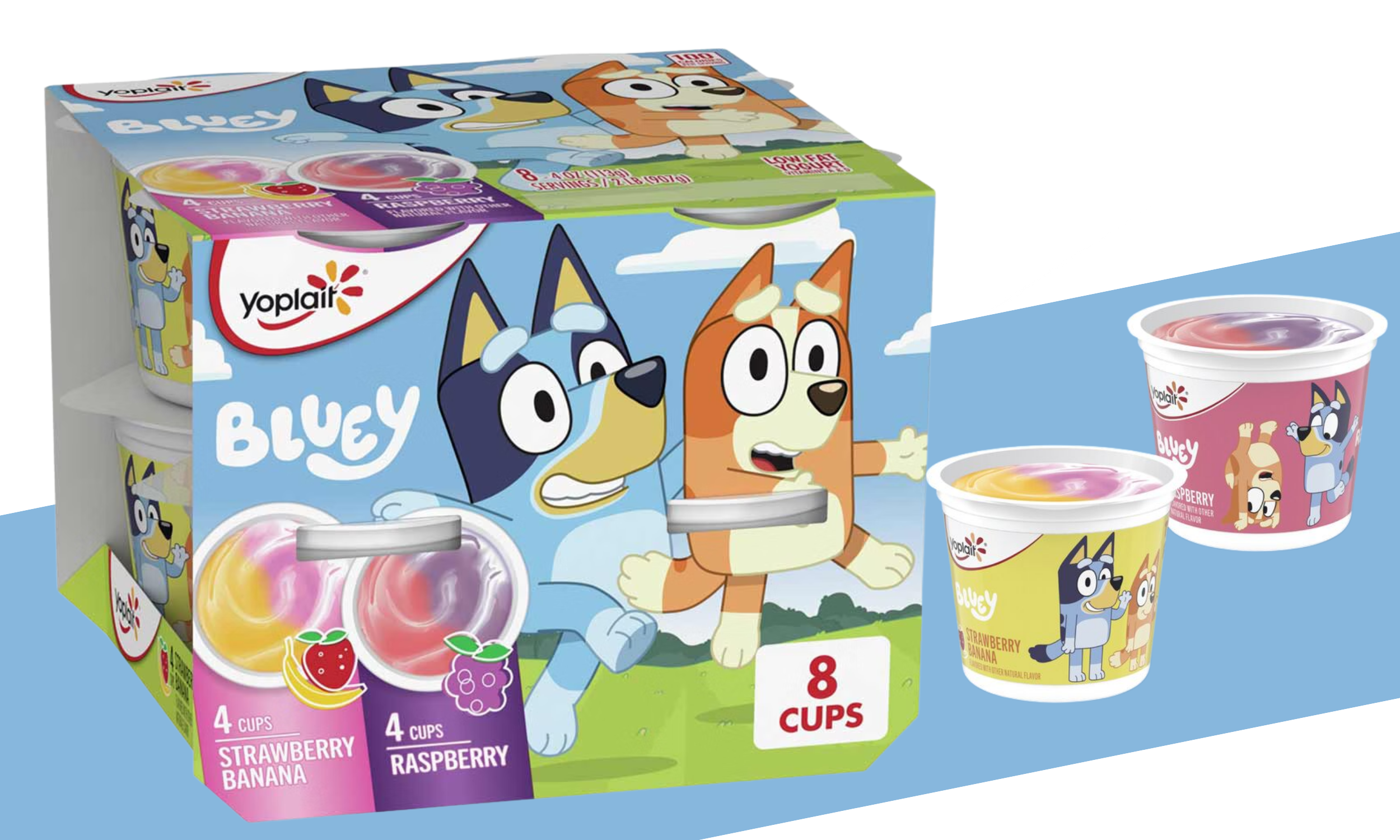
Above: Bluey is quickly becoming one of the hottest licenses for FMCG product.
Brand owners often come to licensing hoping it will solve their supermarket problem. Sometimes it does. Often it solves part of the problem and adds a new cost at the same time. The only way to know which is to be clear about what the supermarket actually demands, and to be honest about which of those demands a license can meet.
For the Licensing + FMCG episode of the Born to License podcast, I sat down with Dayton Miller, Managing Partner at BFG Partners, an early-stage consumer investor. Dayton co-founded the functional drink brand Function and sold it to Sunsweet Growers, so he has seen the grocery shelf from both sides: as a founder fighting for space and as an investor deciding which brands are worth backing. His starting point was blunt. The retailer holds the cards, and a new brand needs demand the buyer can't ignore.
With that in mind, here is how I see licensing against each of the challenges a brand faces in the supermarket.
Getting noticed in a few seconds: yes
Shoppers move through a supermarket on autopilot, buying the same things week after week. A new product gets a few seconds at most to interrupt that habit. This is where licensing is strongest. A familiar character or brand stops a shopper in a way that an unknown logo cannot. In Brazil I watched a small pet brand use Hello Kitty to stand out in an aisle dominated by a wall of purple Whiskas. Without the license, that product would have disappeared into the shelf.
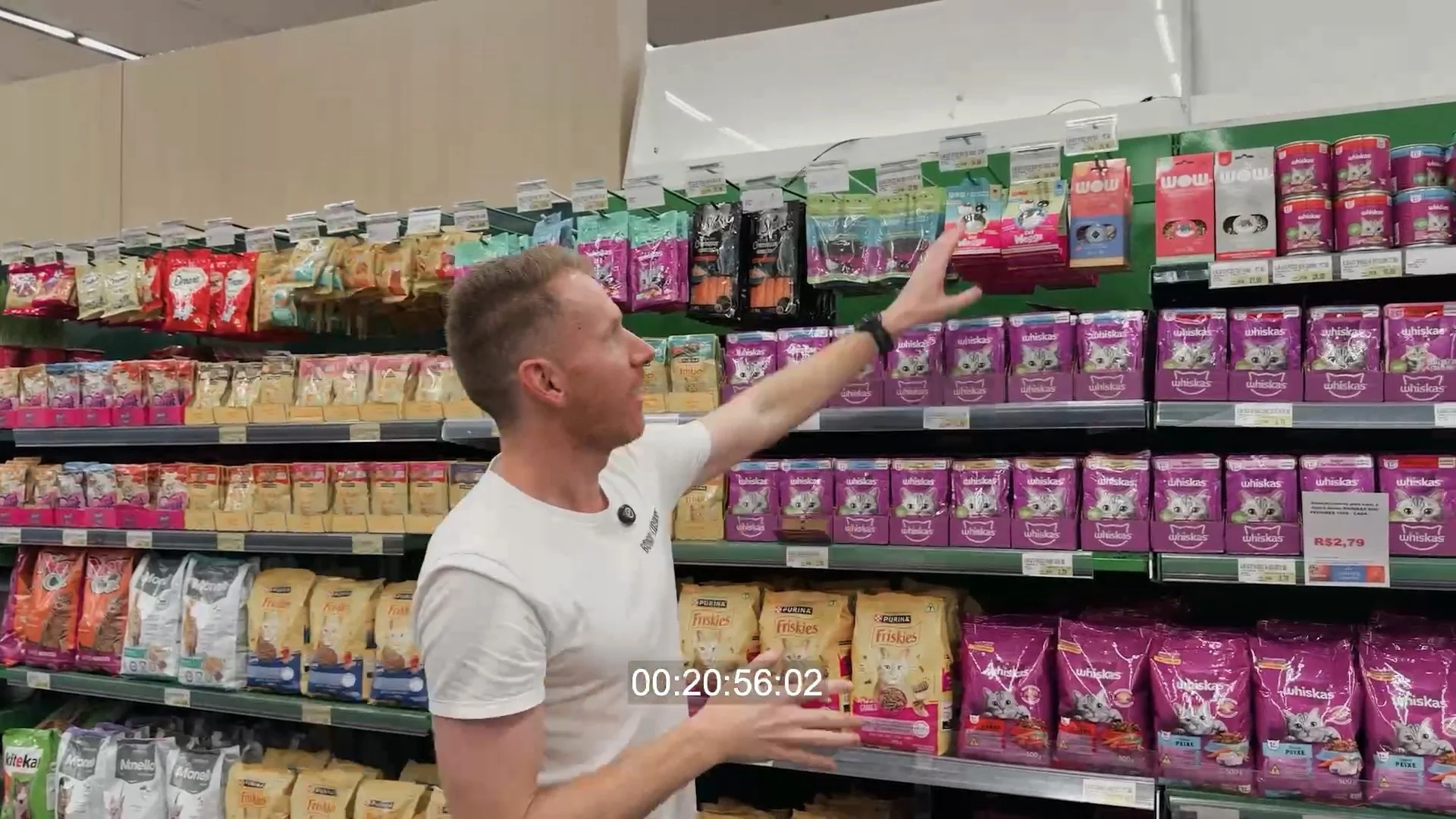
Above: In Brazil I spotted a licensed Hello Kitty cat food product competing with a purple wall of Whiskas.
Getting listed: it helps
Getting a yes from the buyer is the first real hurdle. A license helps because a property brings its own fans, which is exactly the kind of demand Dayton says a buyer can't ignore. A retail buyer looking at an unknown brand has to imagine the demand. A buyer looking at a licensed product can see it.
But a license only opens the door. Buyers keep products that sell. If the product doesn't move fast enough once it's on shelf, the license won't keep it there.
Paying for the privilege: yes, with a catch
As Dayton put it, getting the yes is only half the battle. Then you pay for the privilege, through slotting fees, trade spend and promotional support, and much of that spend is discounting.
This is where licensing earns more credit than it usually gets. A license gives you a reason to promote without cutting your price: a new character, a collectible, a themed display, a new flavour. Every one of those is a promotional story a retailer can get behind that doesn't erode the price point you've fought to establish. For a small brand with thin margins, protecting price while still giving the retailer a reason to feature you is worth a great deal.
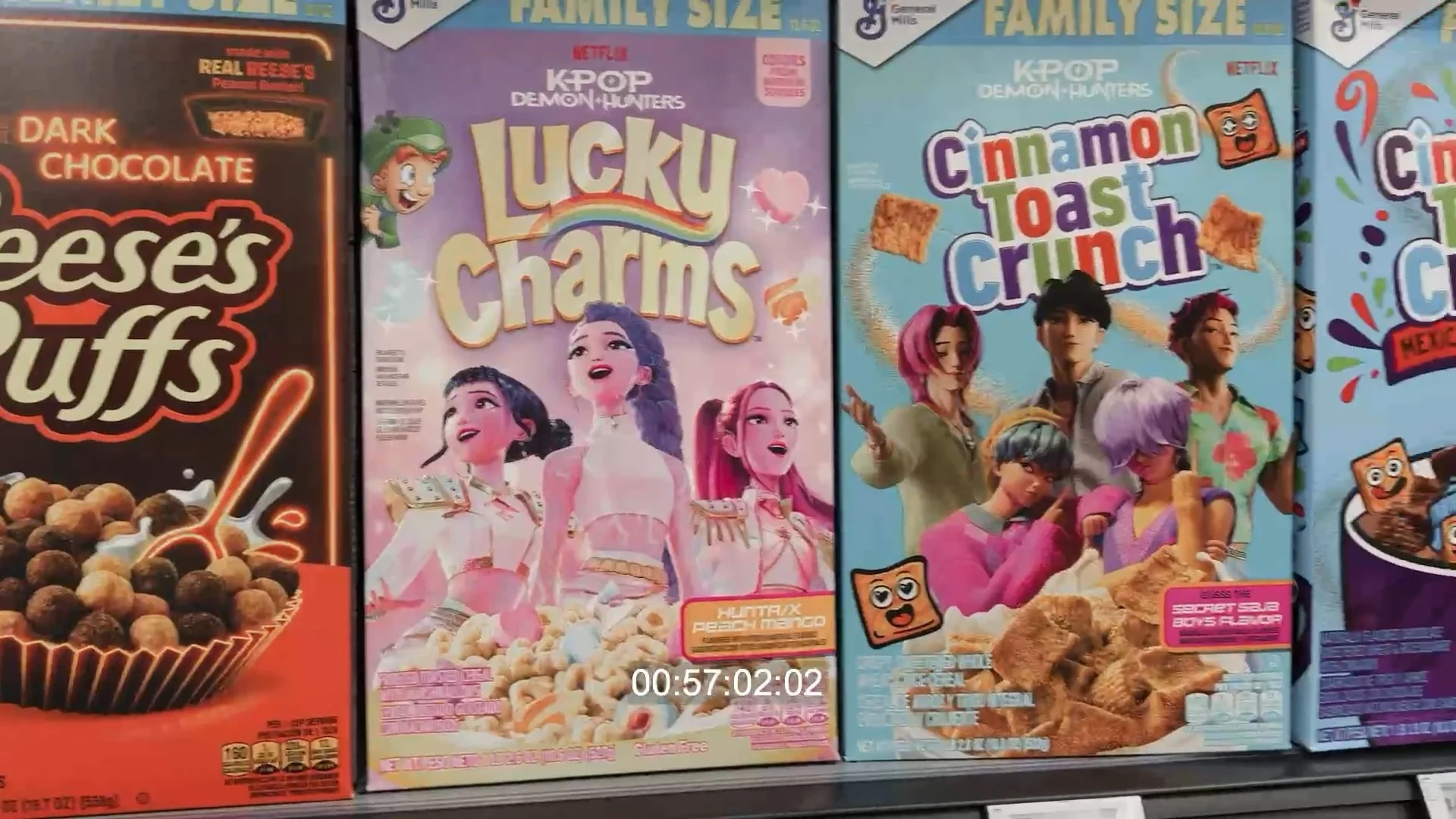
Above: K-Pop Demon Hunters brings a huge fan base to the supermarket aisle
Private label: it cuts both ways
Private label is booming. US store brand sales reached a record $282.8 billion in 2025, according to Circana data released by the Private Label Manufacturers Association, with store brands taking 21.3% of dollar sales. Store brands grew nearly three times as fast as national brands.
Licensing is one of the few things a store brand can't easily copy, which makes it a genuine point of difference for a branded product. But retailers know that too, and they license as well. At Walmart I found its own-brand nappies carrying a licensed character. A license is no longer something only national brands can use against private label. It's something private label is starting to use against them.
Staying on the shelf: only if the product earns it
Getting on the shelf is one thing. Staying there is another entirely, and Dayton was clear that most new products don't.
A license can't fix a weak product. If the taste, price or format is wrong, a character will drive trial and then watch repeat purchase collapse. A license can even work against you. Film artwork dates quickly, and a product tied to last year's release can look old on shelf long before its sell-by date. That's why evergreen properties and licenses designed into the product itself tend to last longer than seasonal artwork on a box.
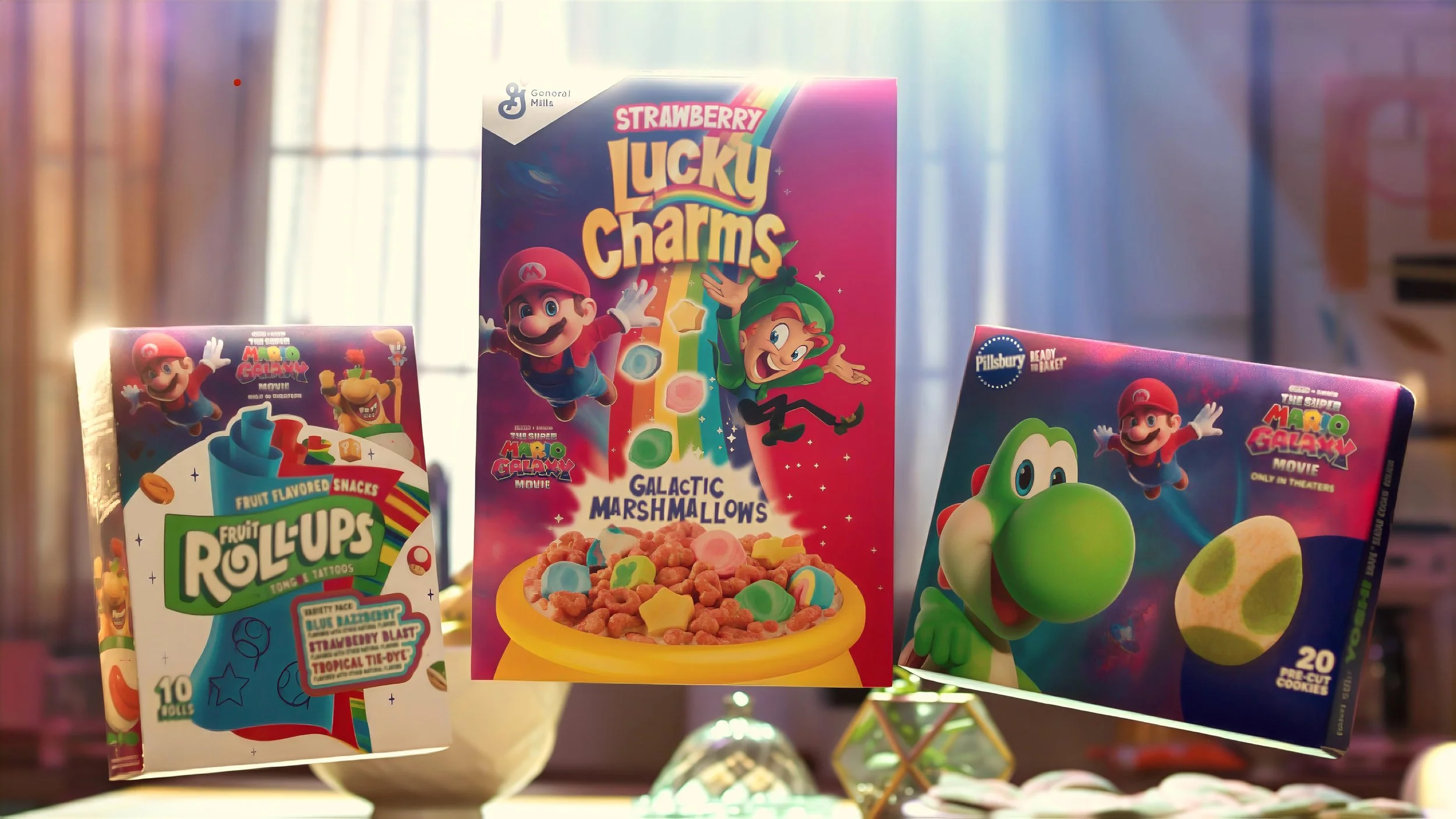
Above: FMCG product that ties in with a theatrical release can be great, but can also date the product if it stays on shelves for too long after the film releases
The cost of getting in: a license adds to it
When I asked Dayton which challenge he would remove if he could, the answer came back to the upfront cost of getting into retail. Licensing doesn't remove that cost. It adds to it.
Food and beverage royalties are typically lower than in other categories, often below 5%, because grocery margins are thin. The licensing study backs that up: global royalties on licensed food and beverage come to about 3.4% of retail sales, against about 5.8% across all licensed categories. But even a modest royalty, plus any minimum guarantee, sits on top of slotting fees and trade spend rather than replacing them. A brand that hasn't modelled the full stack before signing can end up with a license it can't afford to support.
Where that leaves a brand owner
Put together, the picture is clear. Licensing is excellent at attention, helpful at listing, powerful for price-protected promotion, double-edged against private label, and an additional cost on top of everything else. It's a lever on demand. It isn't a substitute for distribution economics, product quality or velocity.
That's why the decision to license should start with the business case, not the property. Which problem are you solving? Can you fund the program through launch and support it on shelf? Is the property right for who is buying and who is consuming? This is the work we do at Born to License: helping brands find, sign and manage the right license, and walk away from the wrong one.
The Bottom Line
A license is leverage, and leverage multiplies whatever is already there. Put it behind a strong product with a funded plan and it gets you noticed, gives the buyer a reason to say yes and gives the retailer a reason to promote without discounting you into the ground. Put it behind a weak product or an unfunded launch and it just multiplies the cost of failing. The retailer still holds the cards. A good license doesn't change that. It changes the hand you're playing, and only if you know which game you're in before you sit down.
want to connect?
The Born Perspective is one part of a bigger conversation. If you want more, you can find me on LinkedIn for industry commentary, Instagram for what's happening day to day, and YouTube and the Born to License Podcast for deeper dives into the world of licensing. Pick your platform. I'll be there.
Explore the Born Collective
Everything I build connects back to licensing. Here's where to go depending on what you need: