
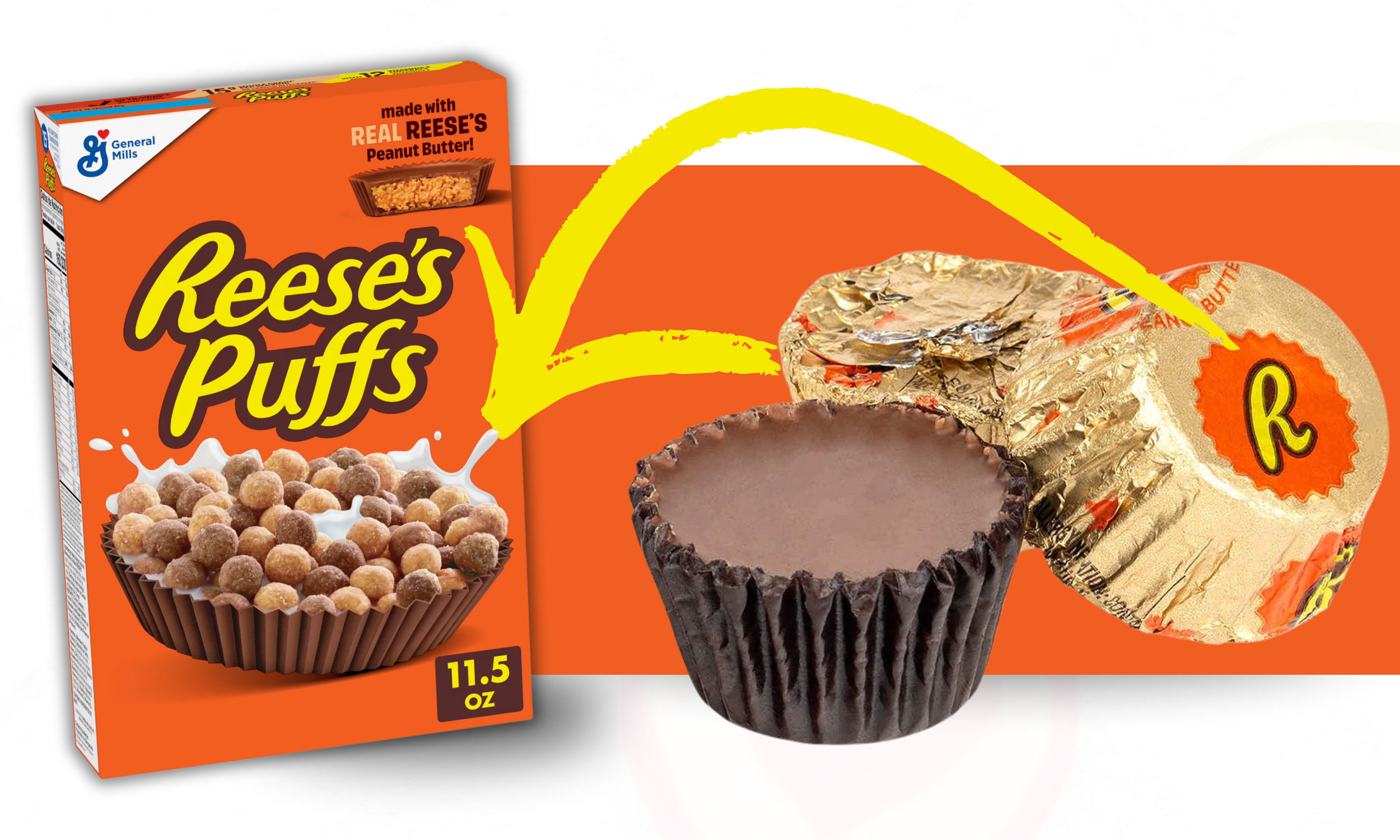
Above: Reece’s is one of the most popular licensed corporate brands in the supermarket aisle
Ask most people what a licensed food product looks like and they'll describe a character on a box. A cartoon on cereal, a superhero on yoghurt, a preschool favourite on a snack pack. That picture is accurate for licensing as a whole. In the supermarket it's wrong.
Across all of licensing, characters and entertainment dominate. In food and drink, corporate brands do. In grocery the most powerful license often isn't a face on the pack. It's the flavour inside it.
What the numbers say
Licensing International's 2026 Global Licensing Industry Study puts global licensed retail sales at $389.8 billion in 2025. Character and entertainment properties account for $161.8 billion of that, about 41.5%, the largest share by a distance. Corporate brands account for about 25%.
In food and beverage the order reverses. Of the $23.2 billion in licensed food and beverage sales, corporate brands account for $11.9 billion, just over half. Characters account for $7.3 billion, less than a third.
Country by country, the gap is even wider in some markets. In the US, corporate brands account for about 59% of licensed food and beverage. In Australia it's about 70%. In Brazil it's around 54%.
The UK is the exception that proves the rule. Food and beverage makes up only about 2% of licensed sales there, and characters lead the category, driven by the preschool properties that dominate British grocery: Peppa Pig, Bluey and the Gruffalo. When I walked a Tesco superstore for the Licensing + FMCG episode of the podcast, that was exactly what I saw. It's a character market for families with young children, and a much smaller licensed food market overall.
A note on the data: these are modelled retail sales estimates, built by Brandar Consulting from a survey of 262 licensing companies plus economic and retail data. The percentages are my calculations from the study's tables. They are best read as the shape of the market rather than precise counts, but the shape is unmistakable.
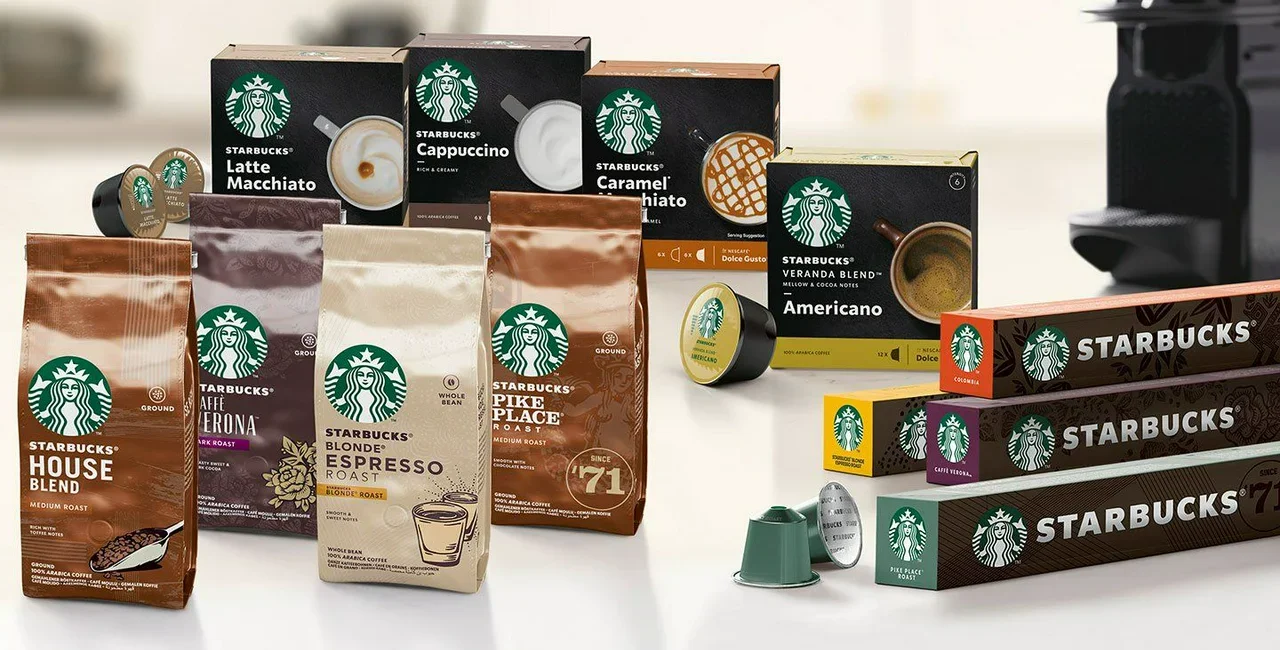
Above: Starbucks have licensed their brand out to Nestle in a major global deal.
When the license is the flavour
At Walmart in Clarksville, Arkansas, the biggest trend on shelf was corporate brands on products those companies don't make. Reese's and Oreo on Betty Crocker mixes. M&M's and Dunkin' across categories well beyond their core products. Starbucks coffee at retail, made and sold by Nestlé. In the UK, Reese's ice cream.
In every one of those products, the license isn't decoration. It's the product promise. A shopper who sees Reese's on a brownie mix knows exactly what it will taste like before they pick it up. The licensee doesn't have to explain or persuade. Decades of brand investment by the licensor do that work in a second.
That is a very different kind of leverage from a character license. A character borrows emotional attachment and hands it to a child. A corporate food brand borrows taste memory and hands it to an adult. Both are valuable, but they solve different problems.
The Licensing International study's commentary backs this up. Agents reported that the strongest corporate properties in 2025 were food and beverage brands licensing into food and beverage, often bringing their ingredients as well as their name. Nostalgia is part of it too. Familiar flavours from childhood are a comfort purchase, and comfort sells when wallets are tight.
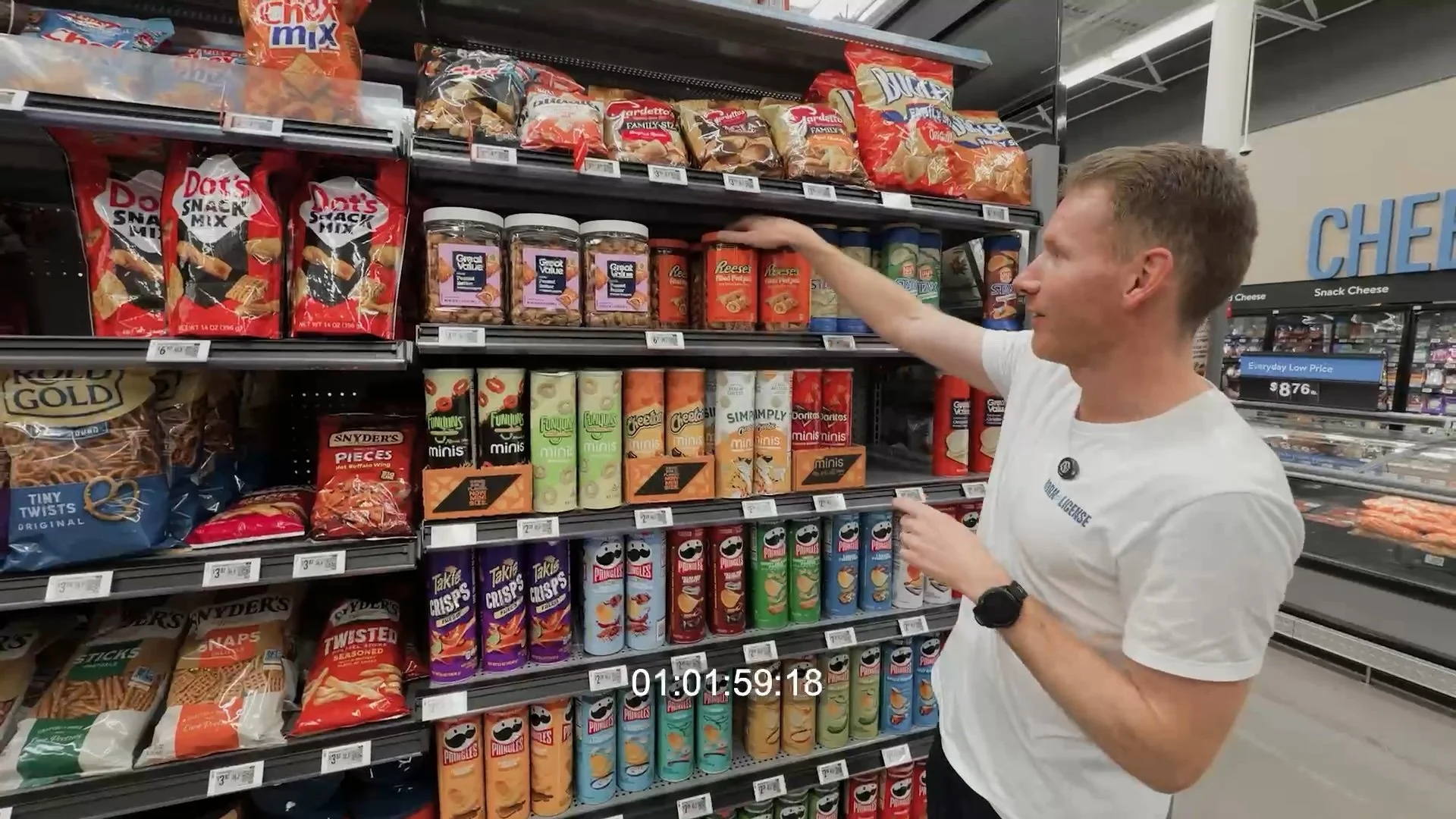
Above: I found a lot of Reece’s licensed product when I visited a Walmart store for the Born to License podcast
Who buys, and who eats
The real lesson isn't that corporate brands beat characters. It's that the right license depends on who is buying and who is consuming.
Where children drive the purchase, characters win. A child in a trolley seat can't read a flavour description but can spot Bluey from the end of the aisle. That's why characters still lead in kids' snacks, yoghurt pouches, oral care and nappies. Even Colgate and Oral-B, two of the strongest brands in any supermarket, license characters for their children's ranges. Their brands win the parent's trust. The character wins the child's cooperation.
Where adults buy and adults eat, flavour wins. The decision is about taste, indulgence and familiarity, and a corporate brand that already owns a flavour in the shopper's mind is the fastest route to that decision.
Celebrity sits in between. Dolly Parton's line with Duncan Hines works because it brings a personality and a story to a category that rarely has either, but celebrity is still only about 1.3% of licensed food and beverage worldwide.
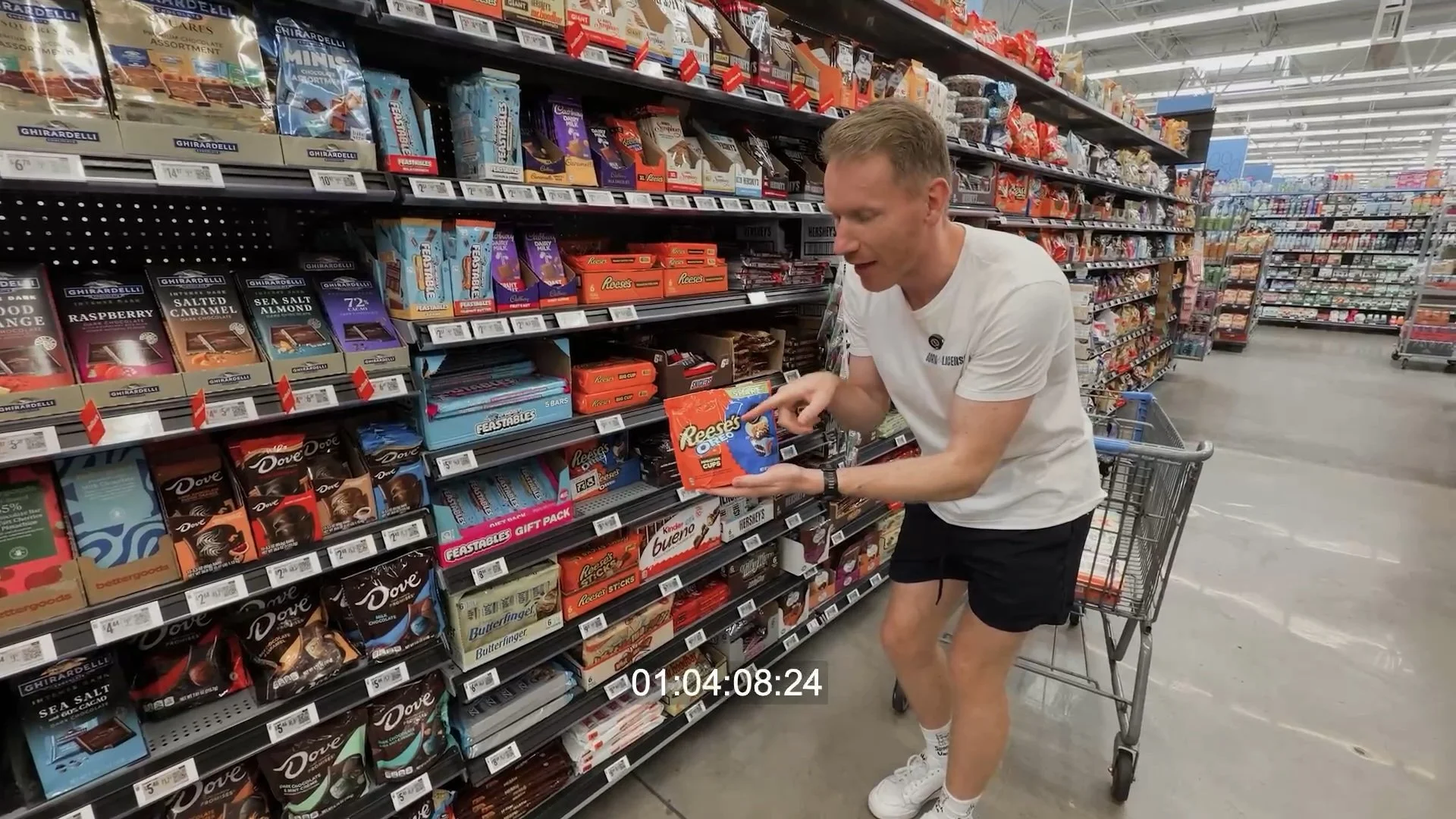
Above: Corporate brand licensing is so popular that even the Reece’s brand does it! I spotted a Reece’s product that is licensing competing brand Oreo.
What this means for brand owners
If you own a food or drink brand with a distinctive flavour, you are sitting on a licensable asset, whether or not you have ever thought of it that way. Adjacent categories, from baking mixes and ice cream to coffee and cereal, are where corporate food brands are already earning in the supermarket.
If you are a manufacturer, borrowing a flavour your shopper already trusts can be the shortest path to trial. If you own a character, compete where the child influences the purchase, and be honest about the categories where an adult's taste memory will beat your character every time.
The Bottom Line
The supermarket rewards whatever removes doubt fastest. For a child, that's a familiar face. For an adult, it's a familiar flavour. The data shows that in food and drink, the familiar flavour is winning, and corporate brands that understand their taste is an asset are taking the largest share of the category. The lesson for anyone licensing into grocery is to stop asking which property is most popular and start asking who is actually making the decision at the shelf. Get that right and the choice of license becomes obvious. Get it wrong and the best-known character in the world won't save the product.
want to connect?
The Born Perspective is one part of a bigger conversation. If you want more, you can find me on LinkedIn for industry commentary, Instagram for what's happening day to day, and YouTube and the Born to License Podcast for deeper dives into the world of licensing. Pick your platform. I'll be there.
Explore the Born Collective
Everything I build connects back to licensing. Here's where to go depending on what you need: