
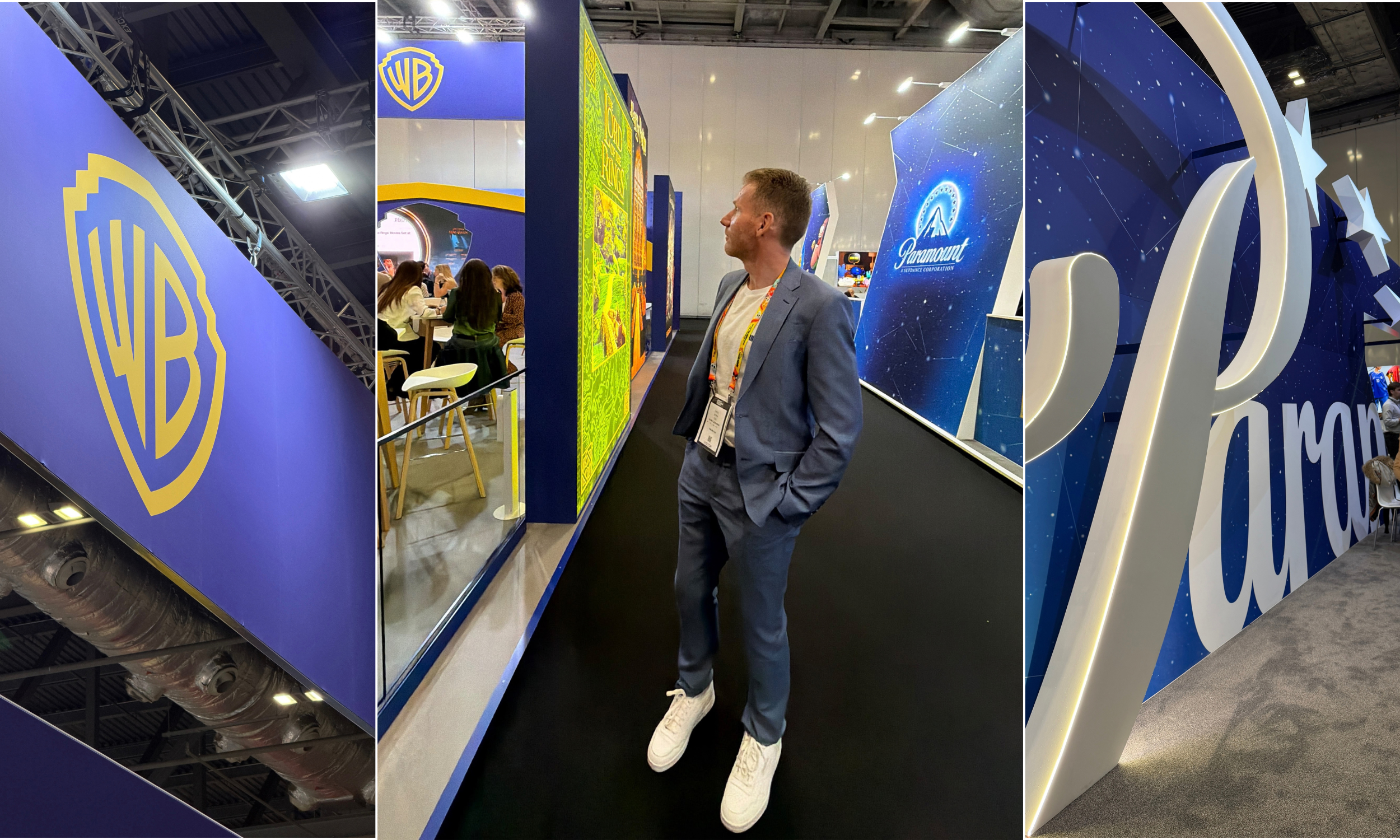
Above: David Born standing between the Warner Bros. Discovery and Paramount booths at Brand Licensing Europe 2026
On Day 1 of Brand Licensing Europe, the Paramount showcase paused to make an announcement: Paramount’s acquisition of Warner Bros. Discovery had officially closed, and the combined company would now be called Skydance. Just like that, Paramount’s enormous entertainment IP catalog had merged with another huge IP portfolio. Harry Potter, DC superheroes and Looney Tunes now sit under the same roof as SpongeBob SquarePants, Top Gun and Teenage Mutant Ninja Turtles.
The next day, I walked into the Warner Bros. Discovery showcase to find a Skydance logo on the screen. When the lights dimmed and the show began, a mighty sizzle reel mashed up some of the best entertainment IP in the world. It was a powerful reminder of just how much IP Skydance now owns.
But there was something unsettling I couldn’t help considering as I walked out. For 90 minutes, the Warner Bros. Discovery team had talked about their plans for their biggest and best IP: major theatrical tentpoles, exciting new TV content. What concerned me most was what they DIDN’T talk about. I can’t say much because I signed a non-disclosure agreement, but I will say that some very strong IPs were given little or no attention during the presentation. And that is exactly why I opposed this deal in the first place.
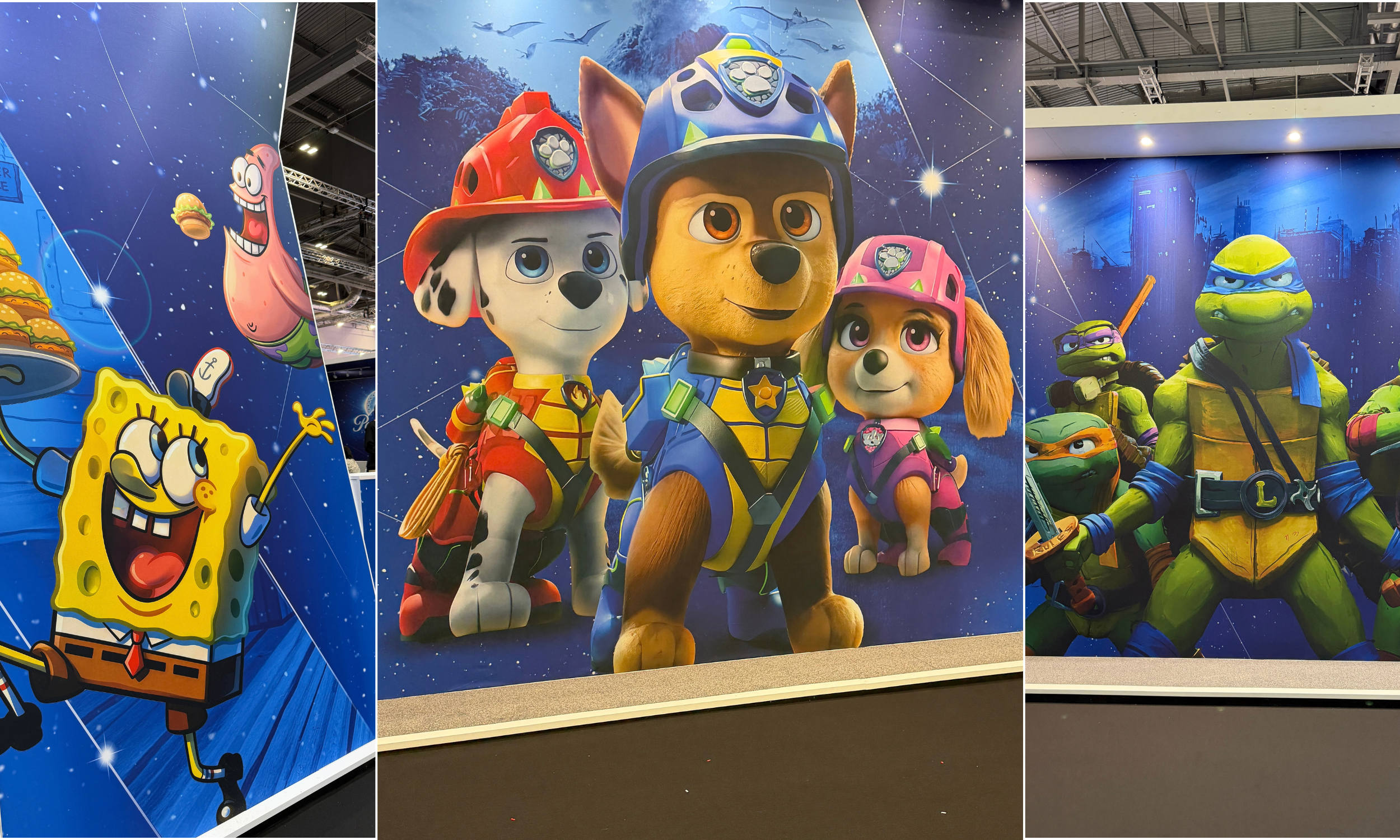
Above: The Paramount booth at Brand Licensing Europe 2026
The Fox Precedent
I’ve been vocal about my concerns. Historically, when major IP catalogs merge, great IP gets sidelined — sometimes for good. Disney’s $71 billion acquisition of 21st Century Fox is the best example we have. Disney already had an enormous portfolio before the deal closed in March 2019 — Mickey Mouse, Disney Princess, Pixar, Marvel, Star Wars and many more. I remember visiting the Fox booth at Licensing Expo before the merger and seeing one-sheets for animation brands like The Simpsons and Family Guy, TV brands like The X-Files and Modern Family, and iconic films like Home Alone and Die Hard. Today, Disney doesn’t even take a booth at Licensing Expo or BLE, and most of those Fox brands have been deprioritized. Recently on my podcast, I talked about how happy I was to see a new LEGO set based on The X-Files — only to find out that it came from a fan-voted LEGO Ideas contest, not from Disney actually prioritizing the IP.
Bandwidth Decides Which IP Survives
Great IP gets forgotten for two reasons: bandwidth and the shift to franchise management. Disney poured its resources and investment into the franchises that perform across multiple parts of its business. The areas that matter most to revenue set the priorities for the entire company — which IP will perform best at the box office and, more recently, which IP can drive Disney+ subscriptions. Add the inevitable reduction in headcount — reports at the time put the job losses from the Fox integration at around 4,000 — and the combined portfolio ended up with far fewer licensing professionals managing it than when the two companies were separate.
I expect the same thing to happen at Skydance. Until now, the Paramount and Warner Bros. Discovery portfolios have been managed by capable (though, I would argue, already under-resourced) licensing teams. Skydance is targeting at least $6 billion in run-rate synergies within three years. Leadership has said most of that will come from non-labor costs, but its own Day One memo warned staff of “difficult decisions that affect our workforce,” and a lot of now-duplicative roles will be shown the door. Over the coming weeks and months, it wouldn’t surprise me if the combined licensing teams were cut down to the size of just one of them before the merger. That creates a huge problem. Whoever survives in the Skydance licensing team will be more time-poor than ever, managing a portfolio twice the size. Great IP will be neglected.
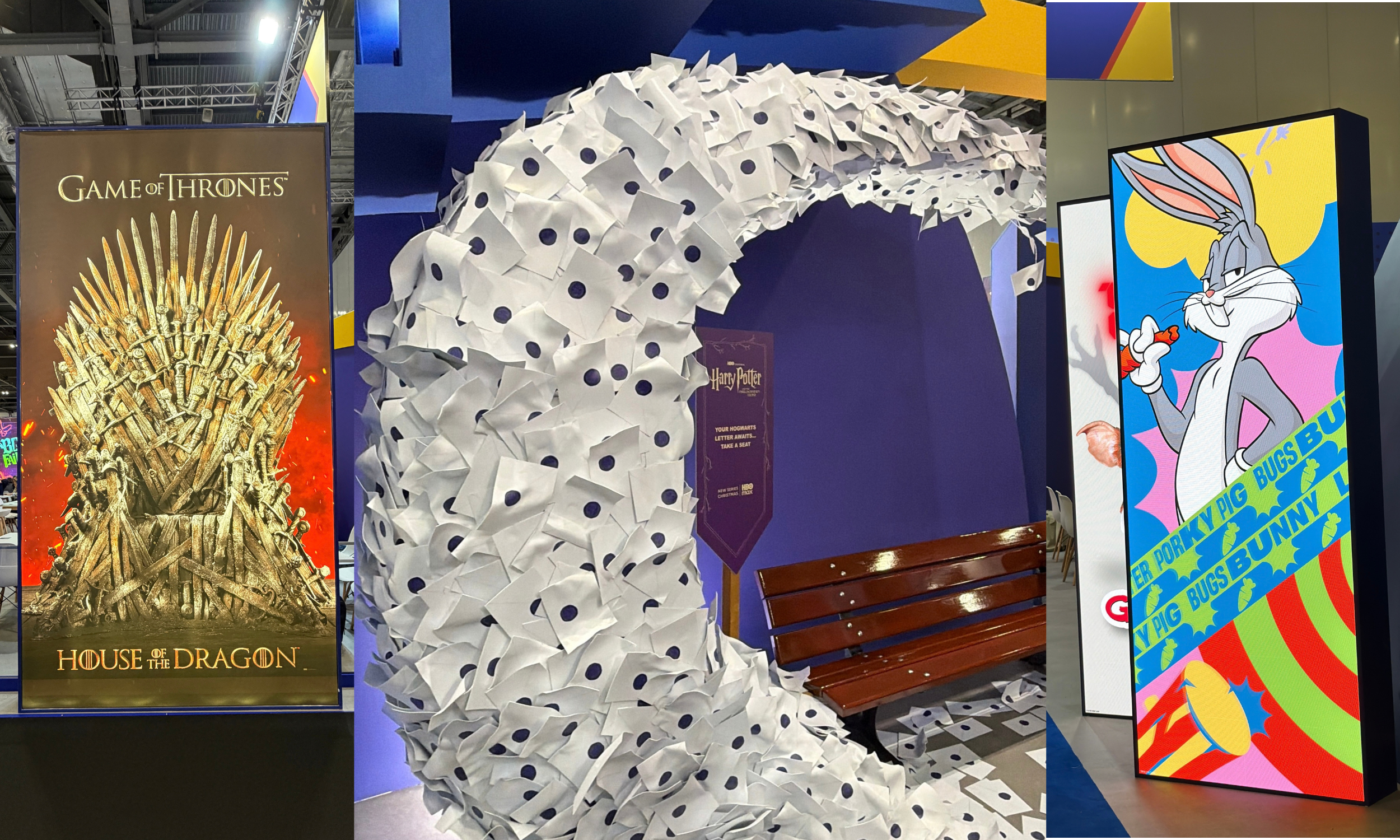
Above: The Warner Bros. Discovery booth at Brand Licensing Europe 2026
One Aisle, One Licensor
Ironically, the Paramount and Warner Bros. Discovery booths sat next to each other at Brand Licensing Europe this year. On the day the acquisition closed, I made a deliberate effort to stand in the aisle between them. To my right was Paramount. To my left was Warner Bros. Discovery. But they were now one. The licensing landscape had changed for good. Based on License Global’s 2026 Top Global Licensors estimates, Warner Bros. Discovery ($15.5 billion in retail sales of licensed merchandise) and Paramount ($7 billion) combine for roughly $22.5 billion. That makes Skydance the fourth-biggest licensor on the planet, leapfrogging NBCUniversal ($20 billion), and the second-biggest entertainment licensor after Disney.
Since the deal closed, I’ve made my position equally clear: as a licensing community, we need to accept that our industry has gone through another momentous shift. We need to embrace it, because we need Skydance to be a huge success. As we root for whatever the Skydance licensing team turns out to be, we also need to encourage those who lose their roles to stay in the industry. There is still opportunity to find white space and drive innovation in licensing. As someone who built an independent licensing agency with Born Licensing, and then a new division doing things differently with Born to License, I know personally that it can be done.
The Bottom Line
The licensing industry has been hurt by portfolio mergers before, and there is no doubt this acquisition will have negative consequences for our industry. But it will happen again, and as an industry we need to make the best of it. My hope is that Skydance finds a way to keep its deep catalog working instead of letting it gather dust, and that the talented people who exit Skydance find ways to bring fresh thinking to licensing.
want to connect?
The Born Perspective is one part of a bigger conversation. If you want more, you can find me on LinkedIn for industry commentary, Instagram for what's happening day to day, and YouTube and the Born to License Podcast for deeper dives into the world of licensing. Pick your platform. I'll be there.
Explore the Born Collective
Everything I build connects back to licensing. Here's where to go depending on what you need: