The Two Things AI can Never Replace in Licensing
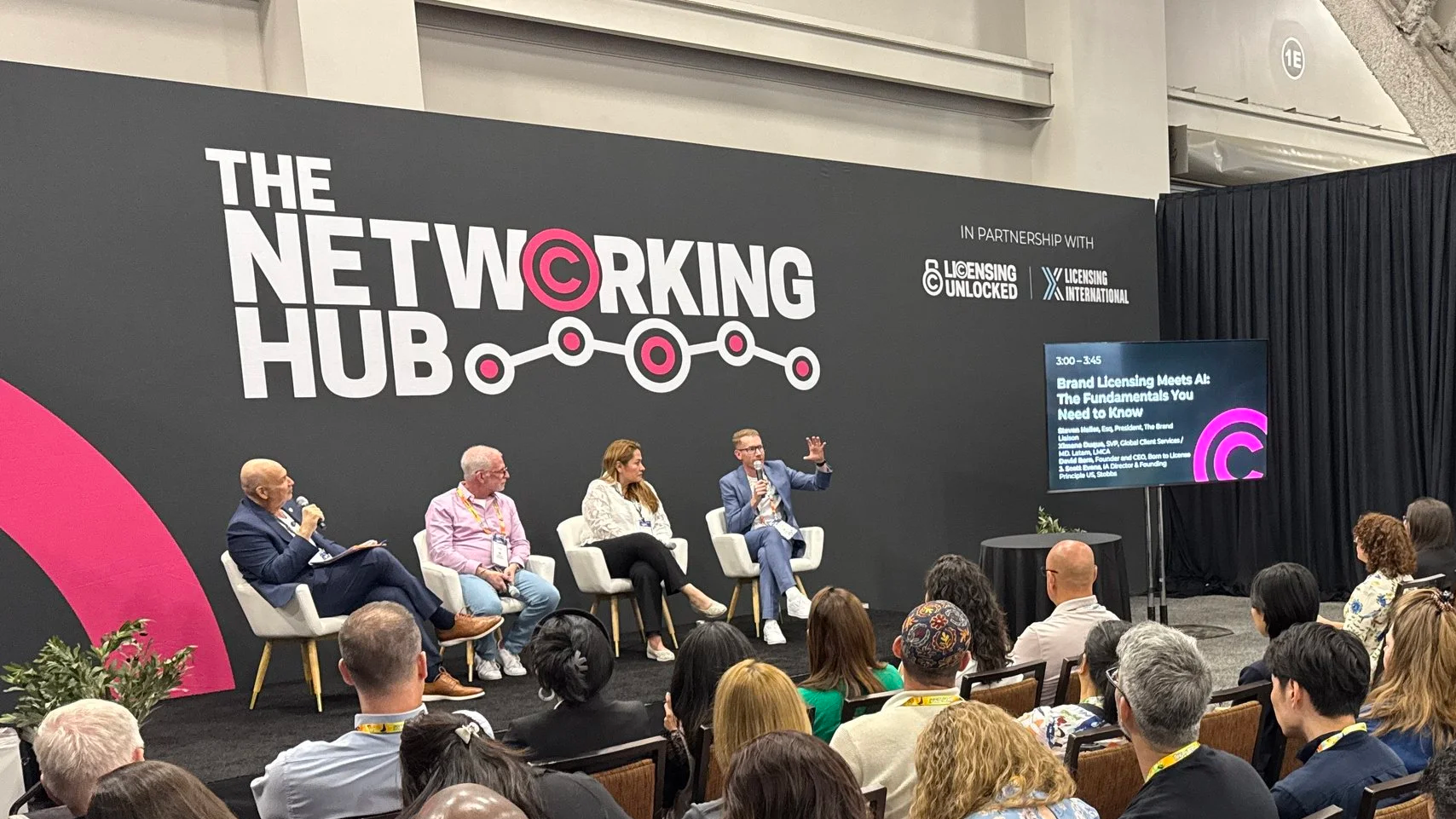
In May I spoke about all things AI and Licensing at The Networking Hub during Licensing Expo 2026
Last month I sat on a panel at Licensing Expo - The Networking Hub - in a session titled “Brand Licensing Meets AI: The Fundamentals You Need to Know.” The panel was chaired by Steven Heller, Founder of Brand Liaison and I sat alongside two sharp industry professionals, J. Scott Evans from Stobbs and Ximena Duque from LMCA. I was asked to share how AI is reshaping the licensing business.
I gave honest answers. And two parts of it I want to expand on here, because I think they matter more than most of what’s being written about AI and licensing right now.
What AI Cannot Do
When asked what AI means to me, my first instinct wasn’t to talk about what it can do. It was to talk about what it cannot.
Every deal in licensing - every agreement signed, every product approved, every royalty structure negotiated - sits on a foundation of trust between human beings. That’s not a romantic notion. It’s a structural reality. Licensing is not a transactional industry. It is a relationship industry.
I’ve been doing this for nearly two decades. I’ve worked on deals with Disney, Warner Bros., Universal, Mattel, Paramount and many more. The ones that worked - the ones that produced real commercial outcomes - worked because of relationships built over years. Because the right person took a phone call. Because someone trusted my word. Because a handshake in a hallway at Licensing Expo preceded a signed license agreement.
No AI tool replicated that. No AI tool ever will.
“AI is not a replacement for two fundamental things that drive the licensing industry. The first one is trust and the second one is relationships.”
I want to be direct: I am not anti-AI. My team uses it. I use it. We’re using it to identify IP, to research market trends, to accelerate content production, to make the Born to License podcast more efficient. AI has compressed hours of work into minutes. That is real value.
But efficiency and trust are not the same thing. AI can make you faster. It cannot make you trusted. And in licensing, being trusted is the asset. The tools are just infrastructure.
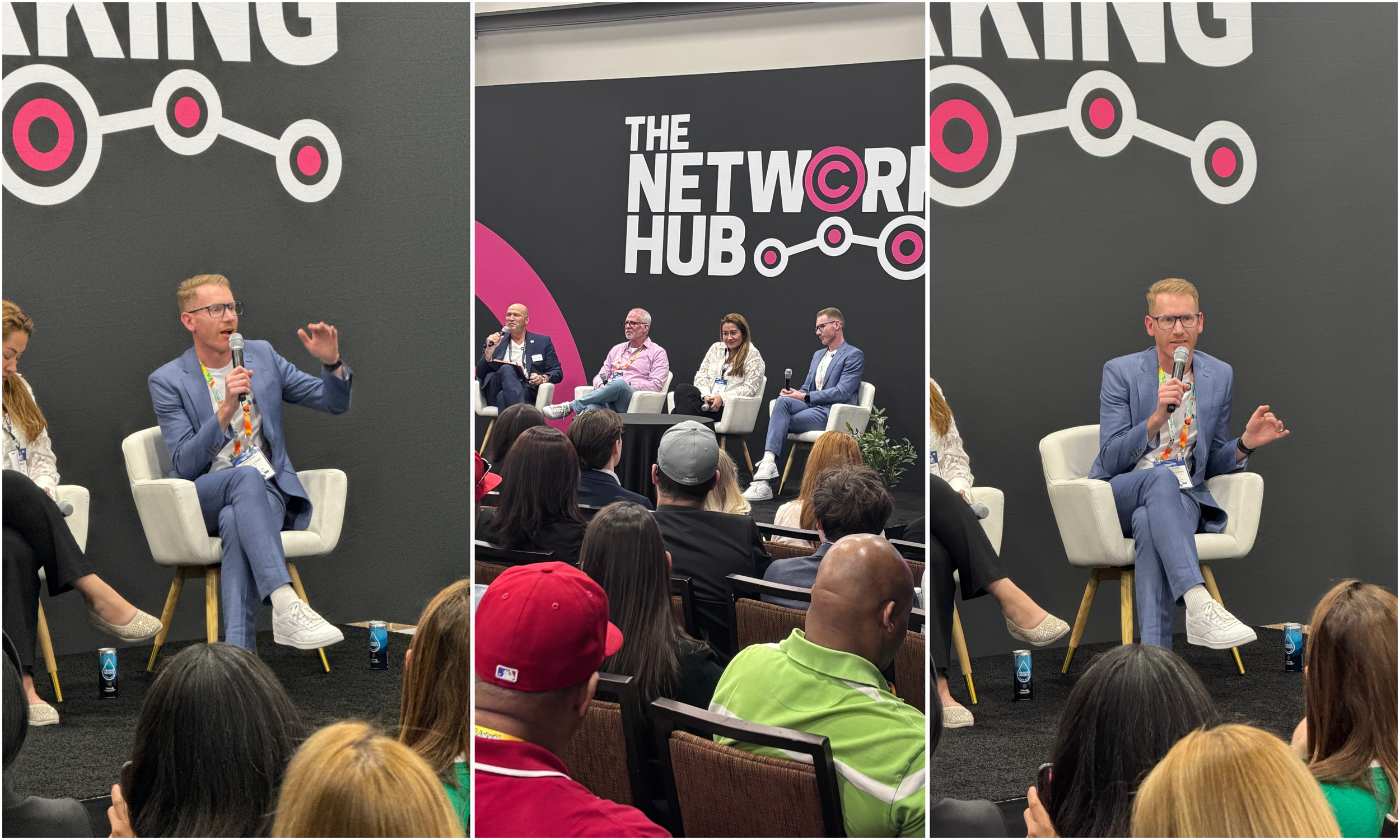
During the panel session I talked about the importance of trust and relationships in licensing.
The Deal Still Happens Human to Human
On the panel, I was asked whether I use AI in deal negotiations. My answer was no. And I meant it - not because I’m resistant to technology, but because deal-making is a personal act.
Negotiating a licensing agreement involves reading the room. It involves knowing when to push and when to hold. It involves understanding what the other party actually needs versus what they’re asking for. It involves trust built over multiple conversations, sometimes over multiple years.
You cannot outsource judgment. You cannot automate credibility. The moment a licensee senses they’re negotiating with a process instead of a person, you’ve lost something you can’t get back.
Will this change over time? Possibly. But in the short and medium term, the deals worth doing are still made the old way: people who respect each other, aligned on a shared outcome, committing to each other’s success.
“Deal making can be a very personal thing. I think that’s something that needs to be done human to human, at least in the short term.”
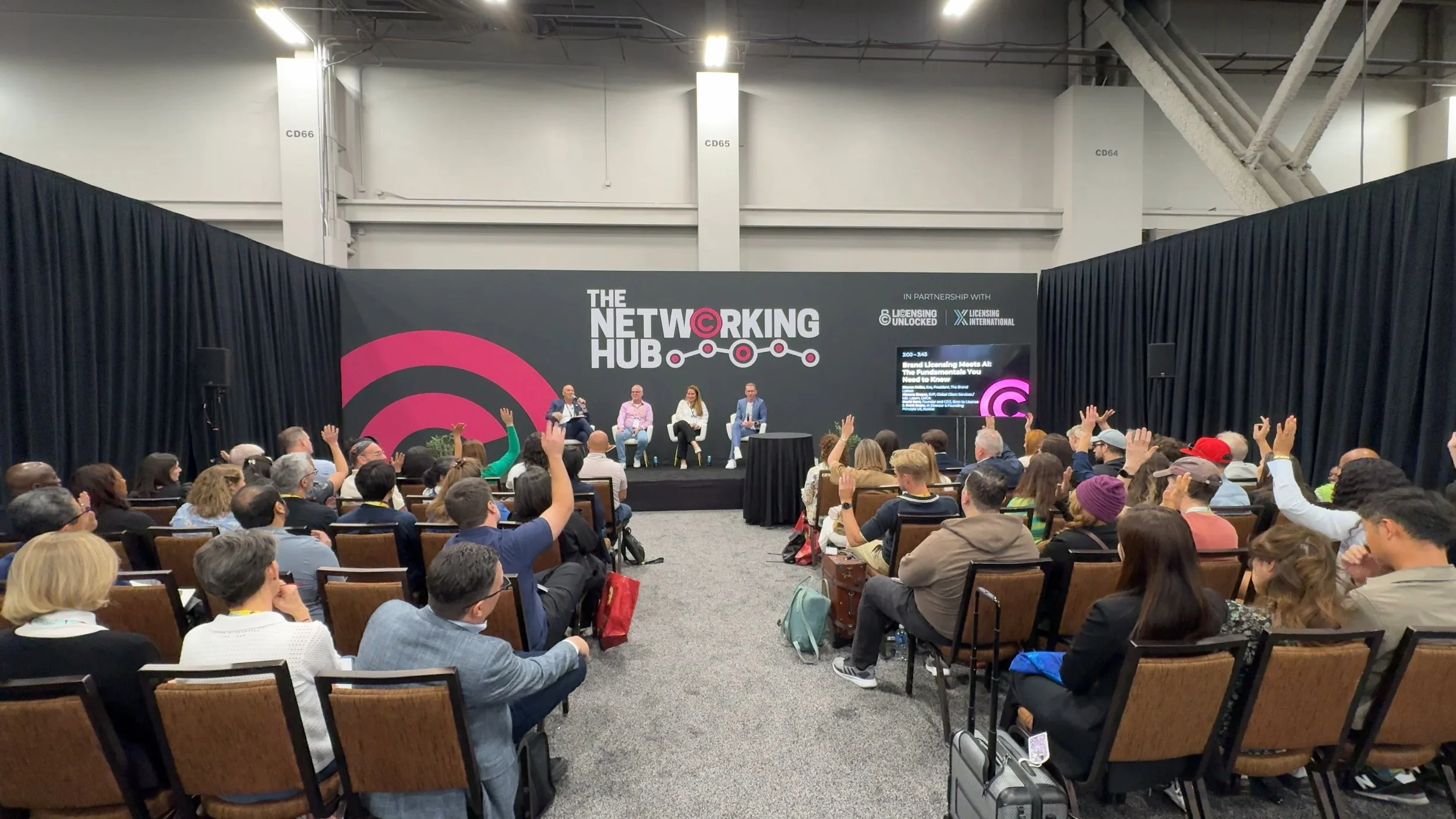
It was a full house at The Networking Hub during the session titled “Brand Licensing Meets AI: The Fundamentals You Need to Know.”
The Warning Nobody Wants to Give
The second thing I said on that panel was harder to say in a room full of senior industry professionals. But I said it anyway, because I think it needs to be said clearly and on record.
“I think we need to make sure as an industry... we’re not eliminating the entry-level jobs.”
Twenty years ago, I was in that entry-level job. I was doing administrative tasks at Haven Licensing in Australia - the kinds of tasks that frankly could be automated today without much difficulty. Royalty data entry. Contract filing. Basic research. The unglamorous work that nobody glorifies but everybody has to do when they’re starting out.
That work taught me the industry. Not because the tasks themselves were intellectually demanding, but because doing them inside a real licensing business - watching deals get made, listening to how experienced operators talked about IP, understanding the rhythm of a licensing calendar - built something in me that cannot be replicated by reading about it, or by prompting an AI to summarise it.
I learned by proximity. By being in the room. By making mistakes that mattered just enough to teach me something.
I now run a team of 14 people. Several of them are on a path I recognise from my own career. The opportunity I was given 20 years ago is the exact same opportunity I’m trying to protect for the next generation coming into this industry.
The Temptation Is Real
I understand the business case for replacing junior roles with AI. I’m a business owner. I’ve run the numbers. When AI can complete in minutes what used to take a junior hours, the logic for not hiring that junior is straightforward.
But here is what that logic misses: the junior is not just doing a task. The junior is learning an industry. And if we systematically remove the on-ramp, we do not just cut costs - we hollow out the future of our workforce.
In five years, who are the mid-level licensing executives? In ten years, who runs the agencies? In fifteen, who has the senior relationships, the pattern recognition, the institutional knowledge to lead?
If we automate the entry point, we break the chain.
What I’m Actually Saying
Use AI. Use it to work faster, to find better IP matches, to draft cleaner contracts, to compress timelines. Use it to make your experienced people more powerful, not to replace the ones who aren’t experienced yet.
Be ruthless about efficiency. Be generous about access.
The licensing industry has survived and grown through every disruption because it is fundamentally built on something that cannot be disrupted: the value of a trusted relationship between a licensor, a licensee, and a shared commitment to a brand that means something to a consumer.
AI does not understand what a brand means. It does not understand what a handshake costs. It does not understand what it feels like to walk the floor at Licensing Expo and have a conversation that changes the direction of a deal.
Those things are learned. They are earned. And they require people - junior people, who become senior people, who become the operators that keep this industry worth being part of.
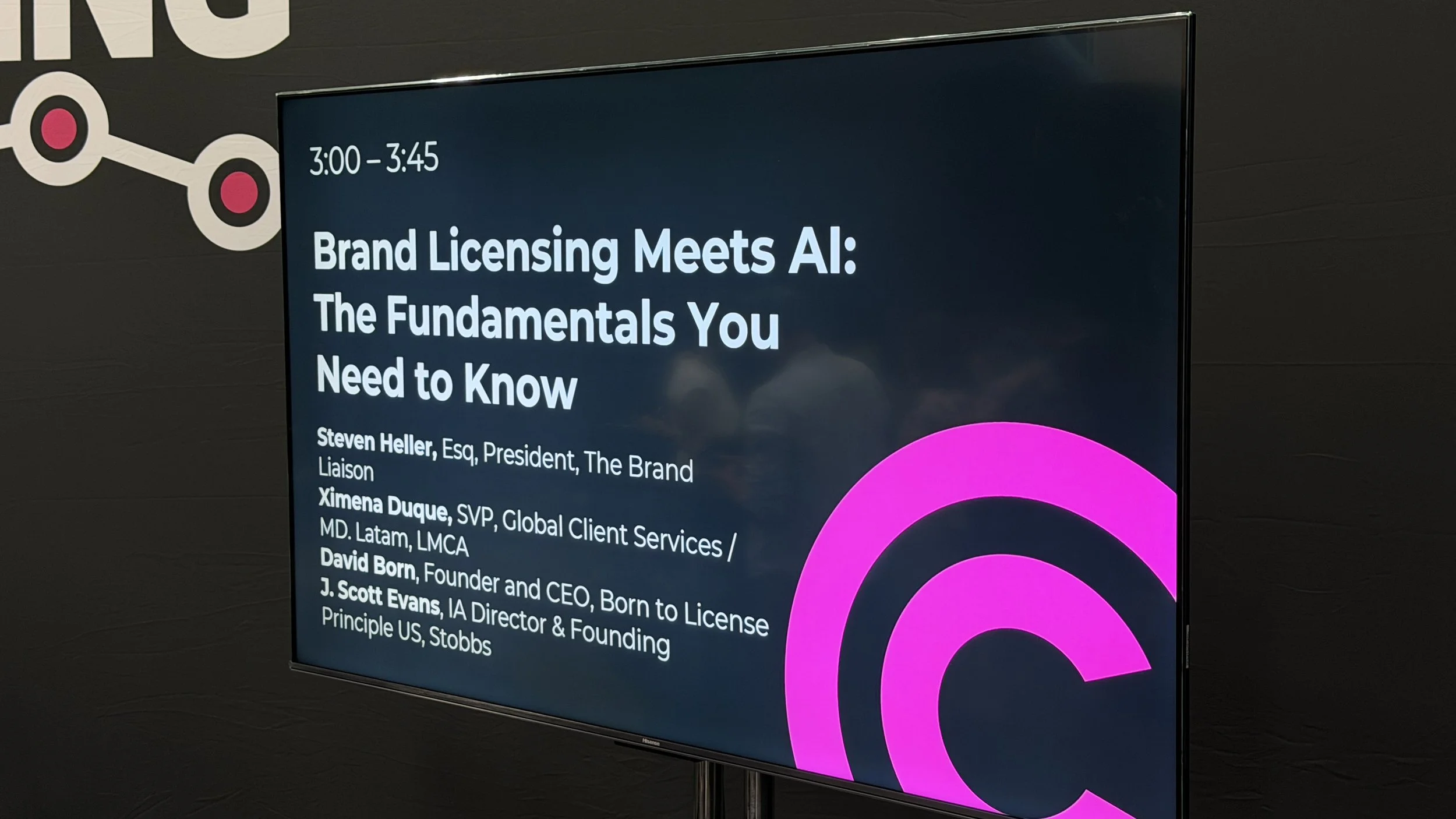
The panel took place at Licensing Expo 2026 at 3pm on Wednesday May 20th 2026.
watch on youtube
The Bottom Line
AI is a tool. A powerful one. Use it. But do not confuse efficiency with strategy, or automation with leadership. The licensing business runs on trust, relationships, and people who have been in the room long enough to know what those things are actually worth.
If you are a business owner or decision maker in this industry, I am asking you to think carefully before you automate away the entry-level role. The long-term cost of that decision is not on the P&L. It’s in the talent pipeline. And by the time you notice it, it’s too late to fix quickly.
want to connect?
The Born Perspective is one part of a bigger conversation. If you want more, you can find me on LinkedIn for industry commentary, Instagram for what's happening day to day, and YouTube and the Born to License Podcast for deeper dives into the world of licensing. Pick your platform. I'll be there.
Explore the Born Collective
Everything I build connects back to licensing. Here's where to go depending on what you need: