What Melbourne Toy Fair 2026 Actually Told Us About the State of Licensing
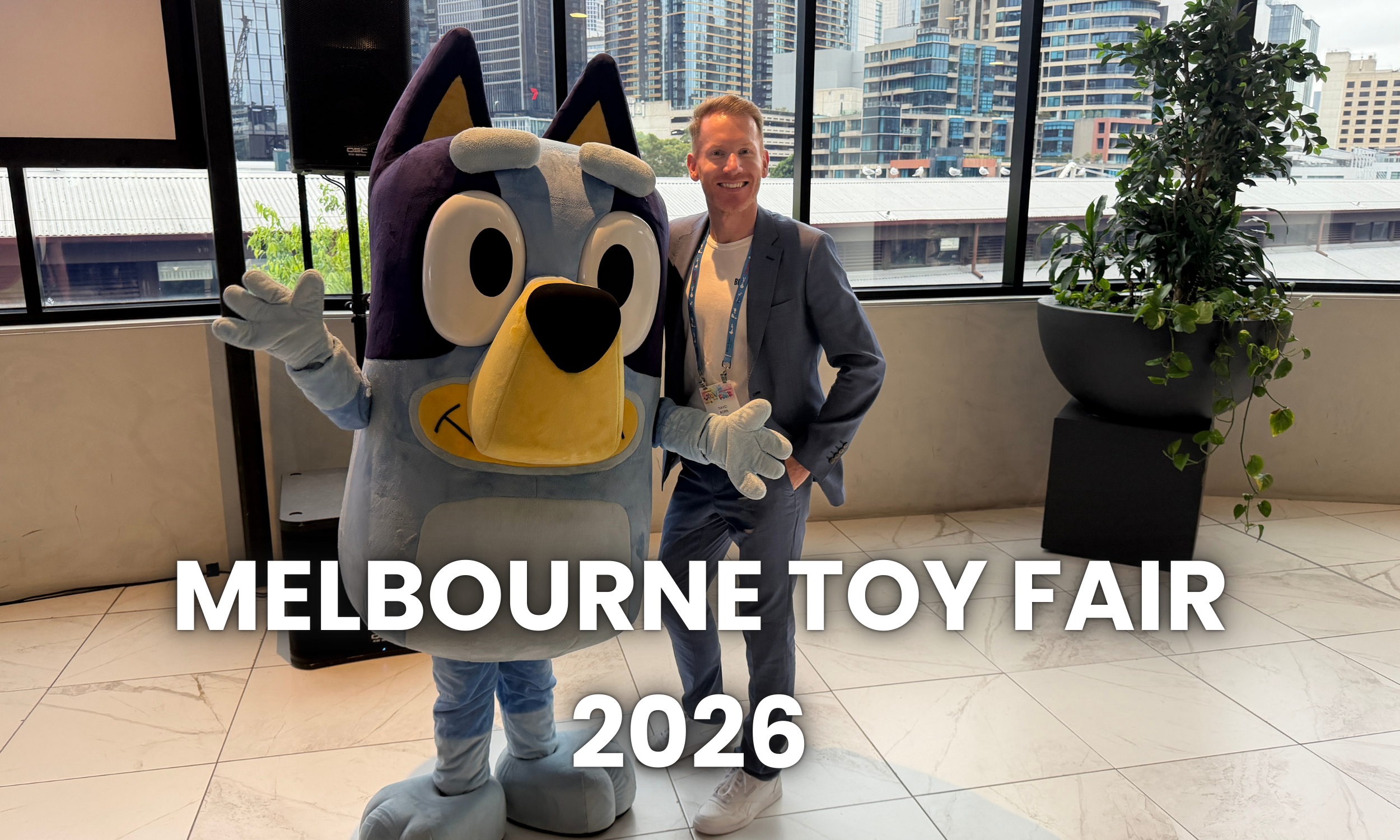
I met one of the hottest licenses in the world right now - Bluey!
I just got back from Melbourne Toy Fair - my first time back in nearly a decade - and the industry looks different. Not unrecognisable. But different in ways that matter strategically.
Here's what I observed, what it means, and what smart operators should be paying attention to right now.
The Energy Was Real - and That's a Data Point
Trade shows can tell you a lot before a single meeting starts. Melbourne Toy Fair was busy, purposeful, and positive. The Bugg Media stand in particular was buzzing with licensing professionals all week. People were there to do business - and they were doing it.
That matters. Because the tone of a show is a leading indicator. When people are moving with intent - not just attending - it tells you the pipeline is alive. Deal flow is happening. The industry is healthy.
After years of disruption - supply chain volatility, retail upheaval, post-pandemic recalibration - the willingness to travel, gather, and do deals in person is a signal worth noting. Don't dismiss it as atmosphere. It's sentiment data.
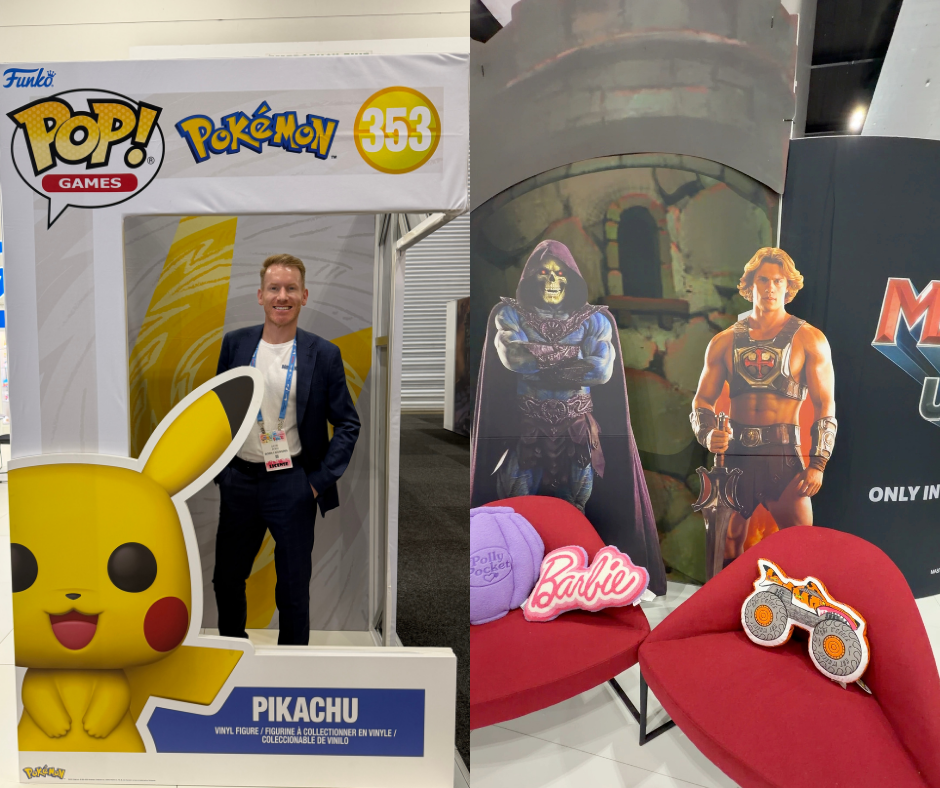
I managed to step into a Pikachu Funko Pop, while taking a sneak peak of Mattel’s top secret Masters of the Universe toy range!
KPop Demon Hunters: What a Breakout Property Actually Reveals
The hottest property on the floor wasn't a decades-old franchise. It was KPop Demon Hunters - the new darling of licensing in 2026. Everyone was talking about it. And if you've been following me on LinkedIn or listening to the Born to License podcast, you know I've been tracking it for a while.
But here's the more interesting conversation: the reactive licensing problem it exposed.
When a property breaks fast - unexpected cultural momentum, fandom-driven virality - the licensing industry is structurally slow to respond. The category took time to catch up. By the time product hits shelves, the peak of cultural conversation has often passed.
This isn't a new problem. But KPop Demon Hunters brought it into sharp focus again. It was the hot property at London Toy Fair and New York Toy Fair too, according to Jenna and Brinna from the Born to License team on the ground at both events.
The lesson isn't "be faster." It's more fundamental: the brands that win at licensing build infrastructure for speed before they need it. Pre-qualified licensees. Clear approval frameworks. Strong styleguides. Retailers fully informed. Speed of execution is a competitive advantage - and most licensing programs aren't built for it.
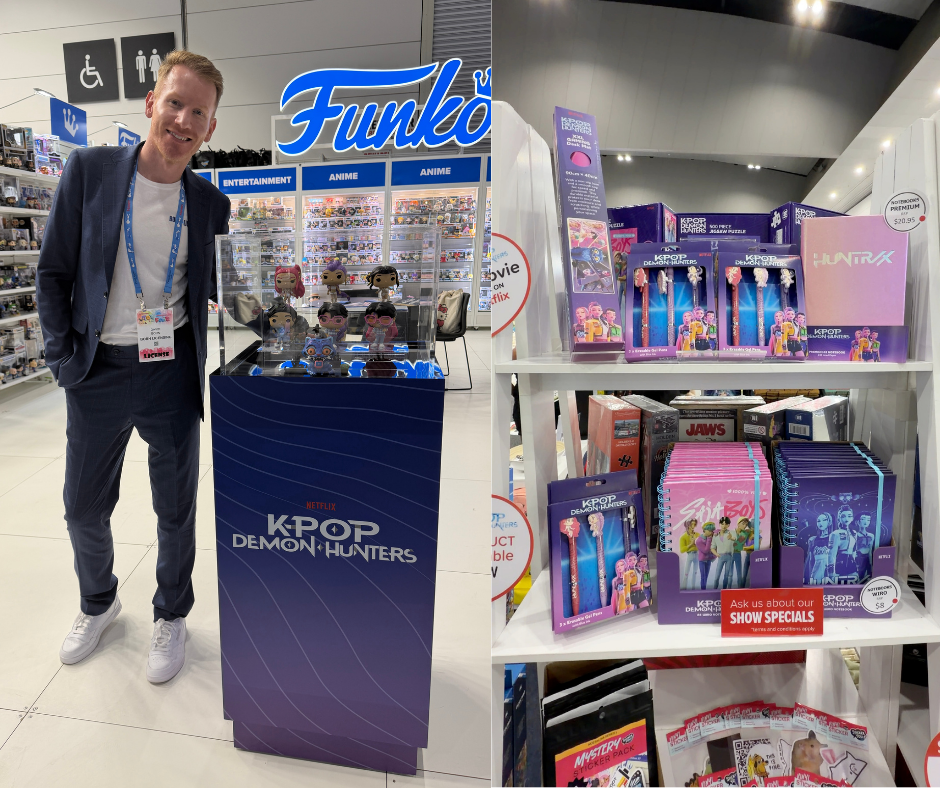
K-Pop Demon Hunters is the darling of licensing at the moment.
Bluey: Everywhere You Looked, and Selling.
Bluey was impossible to miss at Melbourne Toy Fair. The giant popcorn stand activation at the entrance - building excitement for the August 2027 theatrical release - set the tone before you’d even walked the floor. From there, it was everywhere: in conversations, on stands, across categories.
What struck me most was how consistently people were reporting the same thing: product is selling. Not “performing well for the category” or “tracking in line with expectations.” Selling very, very well. Licensee after licensee, across different product categories, said the same thing unprompted. That kind of consistent anecdotal signal from the floor is worth paying attention to.
Presence at a trade show is one thing. Sell-through at retail is another. Right now, Bluey has both.
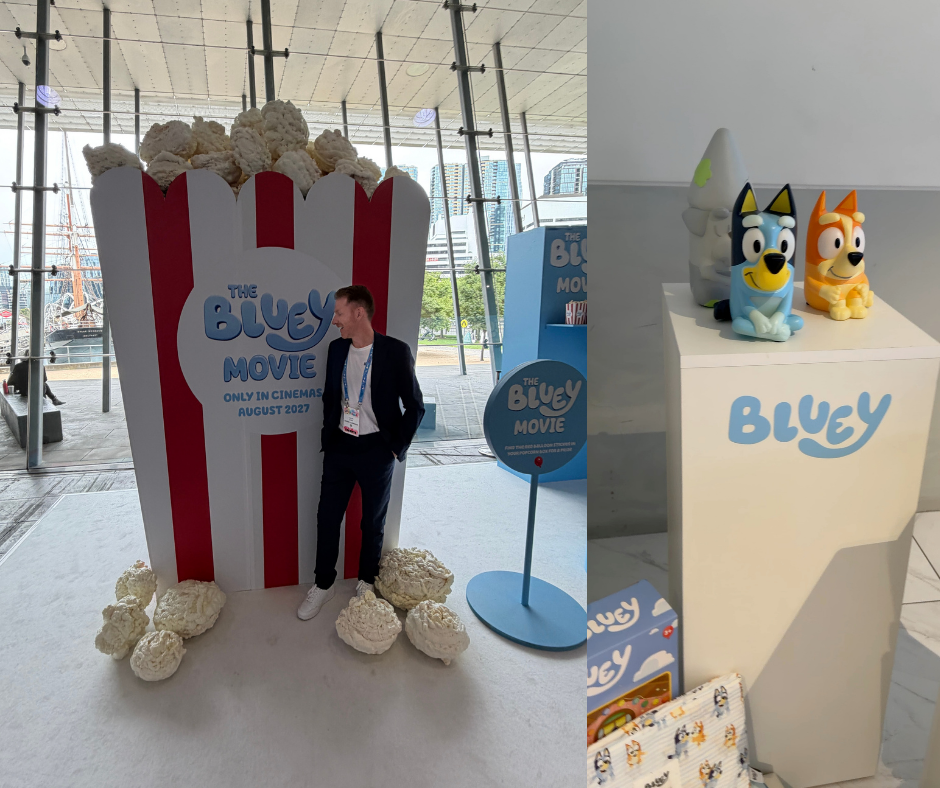
Bluey is doing extremely well for Licensees and has great momentum leading into a movie year.
The Evergreen Brands Are Still Winning
Care Bears. Strawberry Shortcake. Hello Kitty. Snoopy. All prominent on the floor. All still delivering at retail.
The temptation is to read this as nostalgia. It’s not. It’s proof of something more structural.
Evergreen properties don’t stay evergreen by accident. They stay evergreen because their IP holders treat longevity as an active discipline - not a passive inheritance. They invest in keeping the brand culturally relevant, emotionally resonant, and commercially precise. They don’t license everything. They license with intent. And critically, they’re managed by people who understand the difference between exploiting an asset and building one.
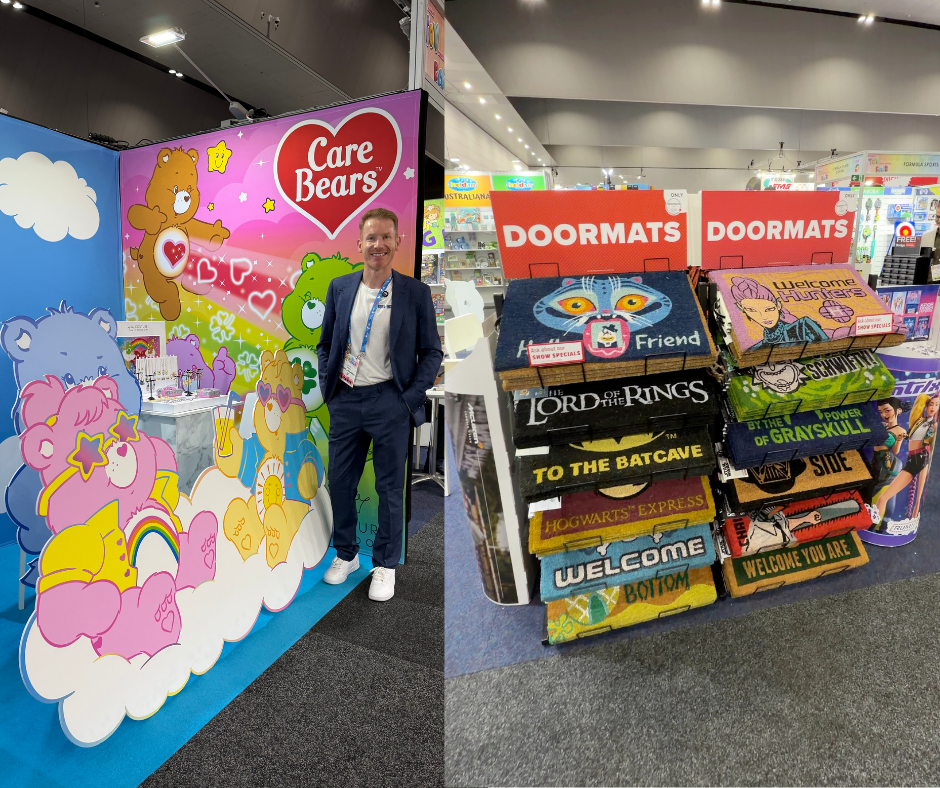
Care Bears was one of the stand out evergreen properties at Melbourne Toy Fair this year.
The Paramount–Warner Bros. Discovery Deal: What Consolidation Actually Means for Licensees
It came up in meeting after meeting. The Paramount and Warner Bros. Discovery merger is the biggest structural conversation in licensing right now - and the industry is watching closely.
For good reason.
Consolidation of IP at that scale means consolidated decision-making. Fewer access points. Fewer internal champions you can build relationships with. Potentially fewer options for licensees and retailers who've relied on competition between studios to negotiate favourable terms.
This is the part of the conversation that often gets skipped in favour of "exciting IP portfolio" headlines. The real question isn't what properties you'll get access to. It's who you'll be negotiating with, and how much leverage you'll have doing it.
If this deal closes, sophisticated licensees need to be thinking now about how they diversify their IP mix - reducing dependence on any single licensor and building direct relationships at the right levels before the org charts change.
Direct-to-Retail Is a Pressure Point That Isn't Going Away
Retail DTR - where a retailer bypasses a licensee and licenses IP directly from the IP holder - came up constantly in conversations. One person described a particular retailer as being "super aggressive." The industry is navigating it carefully.
Here's my view: DTR isn't inherently wrong. In some categories, for some properties, it's genuinely the right structure. But when it's being deployed as a cost-extraction tactic by powerful retailers - essentially disintermediating the licensee to capture margin - it creates real structural tension.
For licensees, the risk is that your retail relationships are quietly being rerouted. For IP holders, the risk is that you're trading a scalable business model for a short-term revenue optimisation that hollows out your ecosystem.
Licensing works best when every party in the structure is motivated to invest. DTR, when deployed aggressively, tends to extract rather than invest. That's worth watching carefully.
See my Instagram reel from Day 1 of Melbourne Toy Fair:
Listen to the Born to License podcast episode where I cover off more key takeaways from Melbourne Toy Fair 2026.
The Bottom Line
Melbourne Toy Fair 2026 confirmed something I already believed, but it's useful to see it validated in real conversations across a busy show floor:
Licensing is not a passive revenue stream. It's an active management discipline.
The properties winning right now - Kpop Demon Hunters, Bluey, the evergreen nostalgics —-aren't winning just because they're popular. They're winning because the people behind them are making smart, deliberate decisions about how, where, and with whom they license.
The pressure points - DTR, studio consolidation, reactive property cycles - are real. But they're navigable for operators who understand the fundamentals.
That's what I came back with from Melbourne. A head full of ideas and a lot of momentum.
want to connect?
The Born Perspective is one part of a bigger conversation. If you want more, you can find me on LinkedIn for industry commentary, Instagram for what's happening day to day, and YouTube and the Born to License Podcast for deeper dives into the world of licensing. Pick your platform. I'll be there.
Explore the Born Collective
Everything I build connects back to licensing. Here's where to go depending on what you need: