
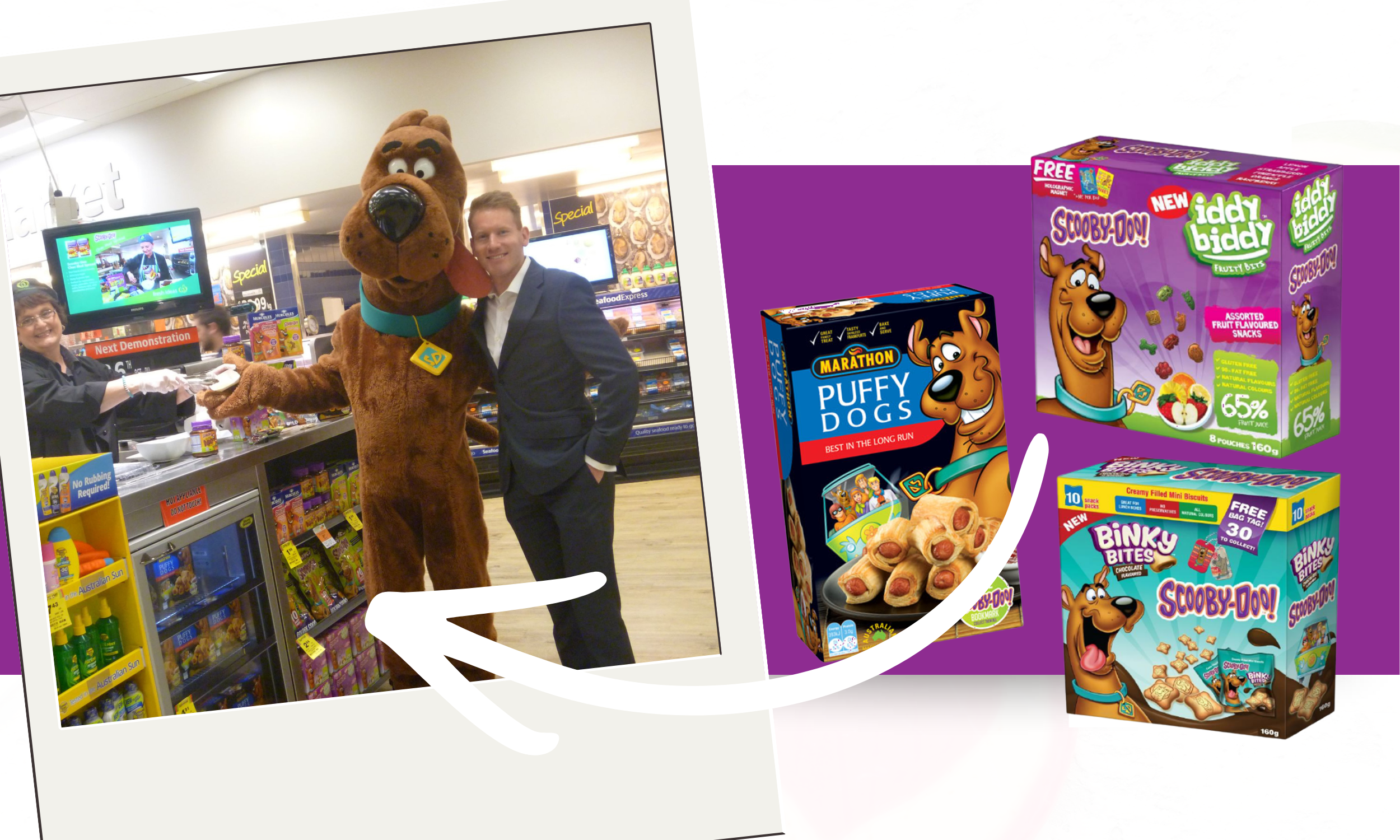
Above: From 2009 - 2013 I managed FMCG licensing for Warner Bros. Consumer Products, including Scooby Snacks!
Walk into any supermarket in the world and, by my count, fewer than one in every 300 products carries a license. Most people in our industry see that number as a problem. I see it as the most honest number in licensing. The supermarket doesn't care how big your box office was or how many followers your character has. It cares whether your IP can change what goes into someone's trolley this week, and again next week.
That is the test I learned on. My licensing career started in FMCG, and I spent my first seven years in the industry there, from a coordinator's desk in Australia to running FMCG across Europe, the Middle East and Africa for Cartoon Network. Everything I've built since, including an agency with multiple licensing divisions, rests on what that category taught me about what IP is actually worth.
The toughest test a license can face
A toy is a considered purchase. A T-shirt is an occasional one. A yoghurt is a habit. Licensed FMCG has to break a habit, win a few seconds of attention from a shopper on autopilot, justify itself to a retail buyer who controls the shelf, and do all of it on margins thin enough that every cent of royalty gets argued over. Then it has to sell again, because in grocery a product that sells once has failed.
That's why I've always believed that if a character can change someone's weekly shop, it has proven its power more convincingly than in any other category. And it's a category that matters. Licensing International's 2026 Global Licensing Industry Study estimates licensed food and beverage sales at $23.2 billion in 2025, growing faster than the licensing market overall for the third year in a row.
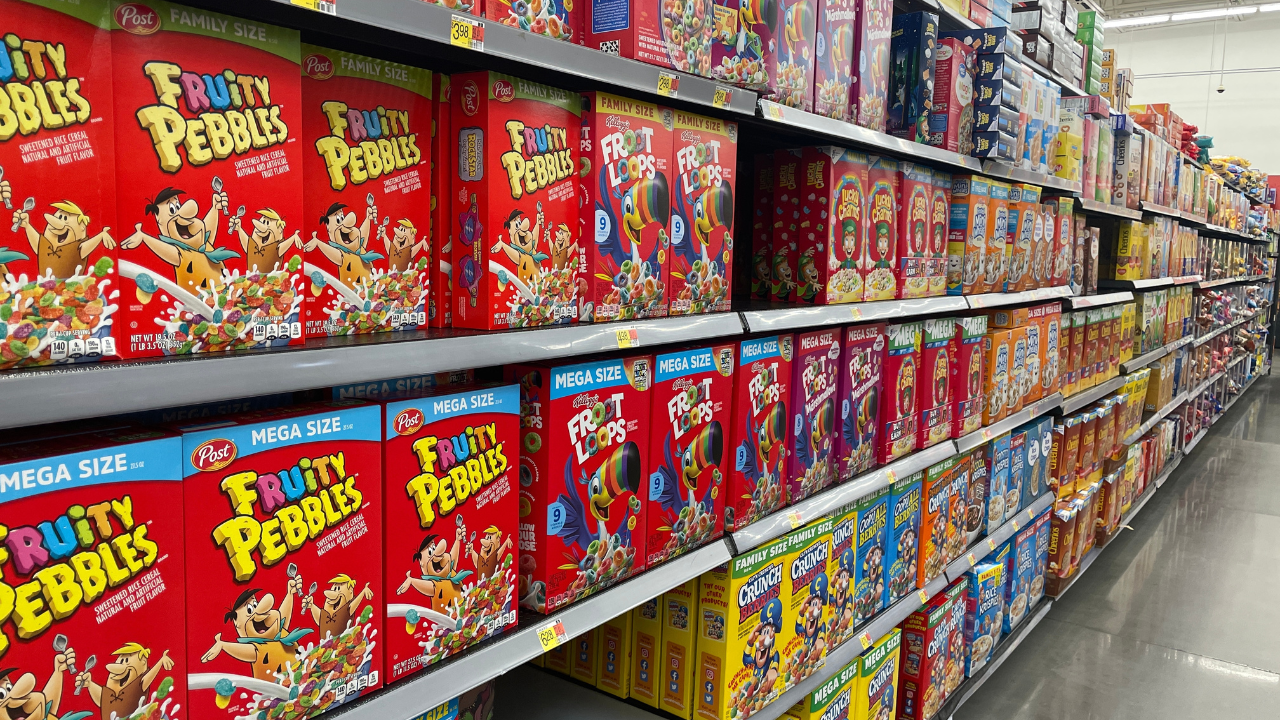
Above: The supermarket is the most competitive playing field at retail - especially the cereal aisle.
Haven Licensing: where it all began
I learnt the ropes as FMCG Licensing Coordinator at Haven Licensing in Australia. The portfolio was a crash course in range: SpongeBob snacks, Star Wars yoghurt and, my personal favourite, Sesame Street eggs.
The eggs are what I remember the most. They are close to a pure commodity. The shopper is choosing on price, size and freshness. But a character such as Elmo from Sesame Street added some life to the category. We went on to license Dora the Explorer for eggs which were also a huge hit. It was a new reason for the shopper to reach for the product.
Warner Bros.: the compounding value of an evergreen
From Haven I moved to Warner Bros. Consumer Products Australia, where I managed FMCG licensing. That's where I worked on Looney Tunes, DC Superheroes and my favourite Scooby-Doo, including fruit snacks shaped like Scooby's head with a collectible magnet in the pack.
Two lessons from that product have stayed with me. The first is that the best licensed food puts the IP inside the product, not just on the box. A shaped snack carries the character all the way to the moment it's eaten. The second is the value of an evergreen. Shaped products need tooling, longer development and tougher approvals, and you're locked into the property once you've paid for them. That investment only makes sense when the character will still be relevant years from now.
Scooby-Doo proves the point. Fifteen years after I worked on that program, I walked through a Woolworths in Australia and he was still in lunchboxes. Most IP never earns that kind of shelf tenure. The properties that do are worth more than their current buzz suggests, and in food that tenure is everything.
Cartoon Network: one character, many markets
Next I became Head of FMCG for EMEA at Cartoon Network, which meant Ben 10 FMCG products across the UK, Europe, Africa and the Middle East. This is where I learned the scale of FMCG licensing in much bigger markets.
The same character meets a different shopper, a different retail structure, different rules on marketing food to children and different price points in every market. A program that works in a UK grocer has to be rebuilt, not translated, for a market where distribution runs through completely different channels. Those differences haven't gone away. Licensing International's figures still show food and beverage at roughly 2% of licensed sales in the UK, against 6% to 7% in the US, Brazil and Australia.
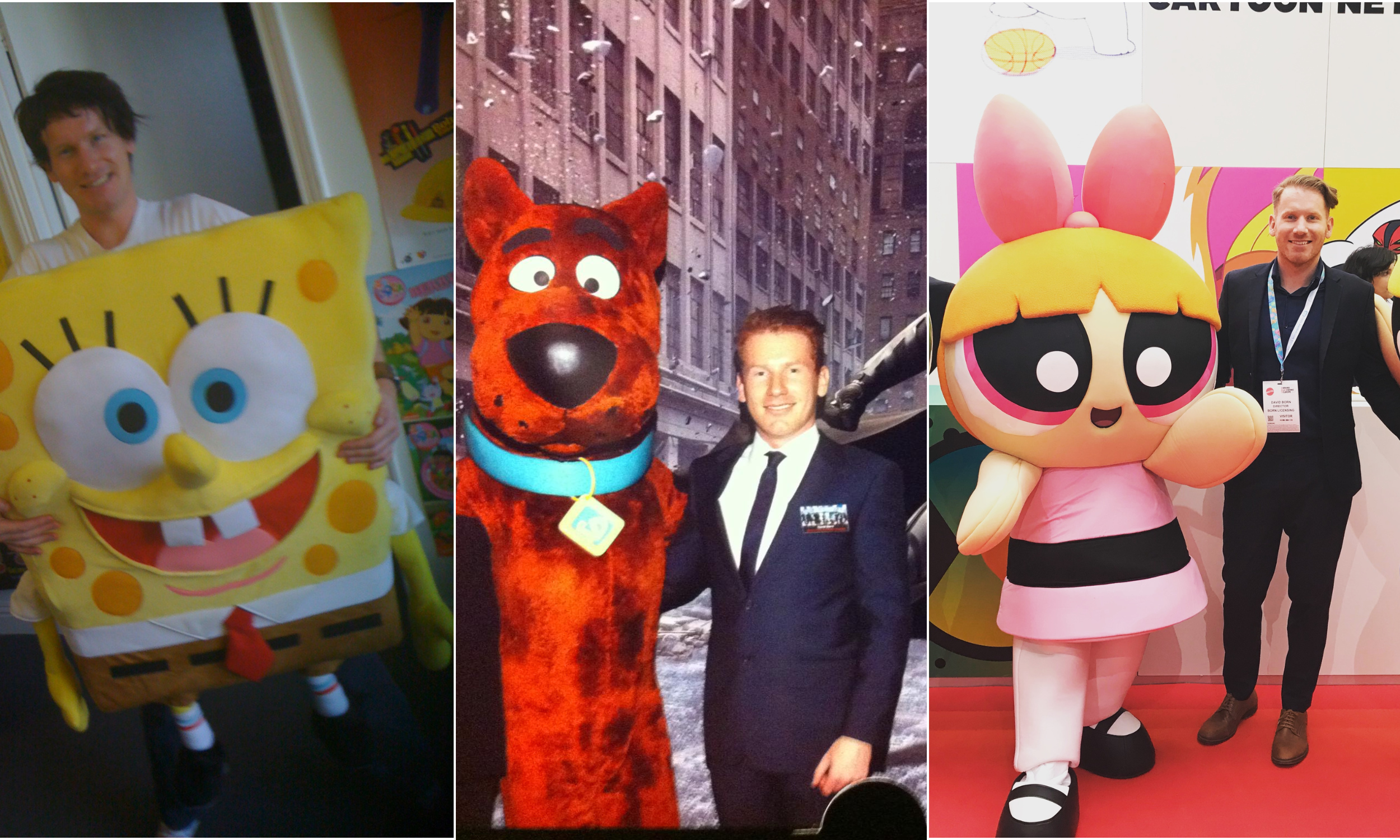
Above: Photos from my time at Haven Licensing, Warner Bros. and Cartoon Network.
What FMCG built
Those years in the supermarket aisle led me to start my own agency, which now runs multiple licensing divisions. The connection back to FMCG is more direct than people expect.
Born Licensing focuses on licensing characters and IP into advertising, and FMCG brands are some of the biggest buyers of that kind of leverage. Earlier this year we launched a campaign with General Mills for its Box Tops for Education program, starring the cast of Saved by the Bell. It ran across more than 100 product SKUs and was featured on tens of millions of packs. That's advertising licensing doing an FMCG job: giving a shopper a reason to pick up a familiar product this week rather than another one.
Born to License works on the consumer products side, and food, drink and personal care keep coming up. We've worked on Peanuts tea, Care Bears beverages, Elf on the Shelf sipper straws and John Deere men's grooming. Our client Pork King Good is about to launch its first licensed product. The categories are different, but the brief is the same one I learned at Haven: the IP has to earn its place on the shelf, not just decorate it.
That's the thread running through all of it. Whether the license sits in a 30-second spot, on a cereal box or inside the product itself, the question is never whether people love the character. The question is whether that love changes what they buy.
The Bottom Line
FMCG is where I learned that IP is only as valuable as the behaviour it changes. Box office numbers, follower counts and nostalgia are all signals, but the supermarket is where those signals either turn into repeat purchases or quietly disappear. Everything I value in a license today, from evergreen staying power to products built around the IP to disciplined execution across markets, was taught to me in the grocery aisle, one carton of eggs and one Scooby-shaped snack at a time. If you want to know how powerful a piece of IP really is, don't ask how many people watched it. Ask whether it can win the weekly shop.
want to connect?
The Born Perspective is one part of a bigger conversation. If you want more, you can find me on LinkedIn for industry commentary, Instagram for what's happening day to day, and YouTube and the Born to License Podcast for deeper dives into the world of licensing. Pick your platform. I'll be there.
Explore the Born Collective
Everything I build connects back to licensing. Here's where to go depending on what you need: